The pilot of a commercial aircraft, descending into near-zero visibility, hands control to an automated system designed for precisely that moment. The landing is flawless. The passengers are safe. The pilot announces it proudly. Technology functions exactly as promised.
A doctor on board writes, “It made me think about the health care journey I am on with AI. The safety and well-being of 140 people wasn’t left to human intervention; the …
Read more…
On January 6, 2026, the FDA announced revised guidance that loosens oversight for certain AI-enabled digital health products, most notably clinical decision support (CDS) software. The goal was to cut unnecessary regulation and promote innovation, accelerating time-to-market for tools positioned as clinical assistants rather than autonomous decision-makers.
At first glance, the change looks pragmatic, even overdue. For years, developers and clinicians alike have complained that prior FDA interpretations forced artificial …
Read more…
The first denial arrived not with cruelty or malice, but with a phrase so familiar it barely registers as language anymore: “not medically necessary.” The cancer drug, recommended by oncologists and supported by evidence and standard of care, was rejected. No phone call. No physician-to-physician conversation. Just an automated letter and a bureaucratic pause inserted into a life that no longer had room for delay.
The family appealed. They fought. They …
Read more…
There are many ways to say “no” in medicine.
“No, this antibiotic won’t help a viral infection.”
“No, this test won’t change our management.”
“No, that surgery carries more risk than benefit.”
And then there is the newest way:
“No, the algorithm doesn’t prioritize your health.”
Welcome to WISeR, short for “Wasteful and Inappropriate Service Reduction,” a Medicare pilot program that promises to usher artificial intelligence into health care decision-making with all the subtlety of …
Read more…
“Turn on, tune in, drop out” was a rallying cry for liberation. “What a long, strange trip it’s been” is how we nostalgically narrate the aftermath. Psychedelic-assisted therapy now sits somewhere between those two cultural bookends: a rapidly professionalizing clinical enterprise and a booming, loosely regulated marketplace of “retreats” selling healing, insight, and transcendence.
The science behind psychedelics is more real than ever. So are the risks. The problem is …
Read more…
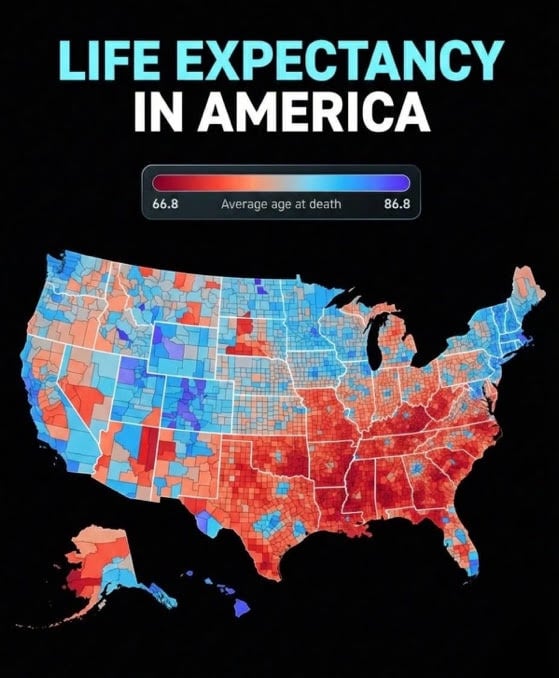
Every New Year arrives with its familiar rituals. We raise a glass, make a resolution, and offer a toast to things we hope will be different this time around: better habits, better balance, better health. We say “I’ll drink to that” as shorthand for optimism, an easy affirmation that the future is still negotiable and a longer life is possible.
Then along comes a map.
Read more…
America’s physician shortage is no longer a distant projection. It is happening now, steadily, one resignation, early retirement, and practice closure at a time.
A nationwide, longitudinal analysis published in Annals of Internal Medicine tracked more than 712,000 physicians caring for Medicare patients over a decade and found a troubling trend: Physician attrition from clinical practice rose from 3.5 percent in 2013 to 4.9 percent in 2019, across every specialty, …
Read more…
“The meds made me do it” has become a familiar refrain whenever psychiatric treatment intersects with tragedy. It is a phrase heavy with implication, suggesting loss of control, a sense of medical betrayal, and a system that failed at its most basic task: keeping people safe. When cases like the Nick Reiner tragedy enter the public consciousness, that phrase resurfaces almost reflexively, offering a deceptively simple explanation for something incredibly …
Read more…
I read Zoe Crawford’s thoughtful KevinMD essay on the limitations of direct primary care (DPC) with great interest. Her frustration as a medically complex patient navigating a fragmented health care system will resonate with anyone who has struggled to obtain timely imaging, referrals, or specialty care. As a clinician who has spent a career thinking and writing about how health systems fail both patients and physicians, I agree with …
Read more…
I’ve been thinking about “choice” a lot lately, not the rich, ethically grounded version we teach in medical school, rooted in autonomy, informed consent, and shared decision-making, but a thinner, more selective version now circulating in political and legal discourse. The kind that sounds principled until you read the fine print.
The message goes like this: You may choose, just make sure you choose correctly.
It’s the literary equivalent of Animal Farm: …
Read more…
“Once in a while you get shown the light
In the strangest of places if you look at it right.”
That line from Scarlet Begonias (lyrics by Robert Hunter, melody by Jerry Garcia) has followed generations like a benediction disguised as a song lyric. Released in 1974 on the Grateful Dead album From the Mars Hotel, it has become something more than poetry. It is a philosophy of attention, a reminder that …
Read more…
Something very distinctive happens once students complete medical school and residency: some of them start acting like excrement. Not all, but enough that most of us have witnessed the transformation. Maybe you’ve noticed it in your mentees, or in the children of friends and colleagues who went into medicine. Maybe, uncomfortably, you’ve wondered if it happened to your own children. And, if you’re like me, reflecting at the tail end …
Read more…
I’m not paranoid. And I don’t believe in conspiracy theories. But as a physician who has spent decades watching the pendulum of medical ethics swing back and forth, I can’t ignore the pattern emerging across public health and politics today. Some of what I’m seeing looks uncomfortably familiar. It looks like eugenics, not the caricature of white coats and calipers, but the quieter, policy-driven, values-encoded version that shaped America a …
Read more…
An excerpt from Real Medicine, Unreal Stories, Volume 3.
The café was quiet, tucked between a shuttered bookstore and a yoga studio that only seemed to open during Mercury retrograde. It was the kind of place that didn’t advertise, which made it perfect for writers, wanderers, and today, two physicians who had long since discovered that stories, not stethoscopes, were the truest diagnostic tools.
Dr. Gary Handler stirred his coffee absentmindedly, …
Read more…
I won’t be using CVS pharmacies anymore. Sure, I may still need to send prescriptions their way as a physician—but as a consumer, I’m done.
Why?
CVS has recently implemented a new phone system that forces callers to leave a voicemail instead of waiting on hold. The idea is to streamline operations, letting pharmacy staff return calls when they have time. It’s supposed to manage call volume, reduce wait times, and shield …
Read more…
This story is fiction but inspired by the real and worsening challenges faced by international medical graduates navigating U.S. immigration policy.
The acceptance letter sat printed on top of Nabeel Khan’s passport, still warm from the old inkjet printer in his family’s living room in Lahore. The words glowed like prophecy: “Congratulations! We are thrilled to welcome you to our Internal Medicine Residency Program at St. Julian’s Hospital, Topeka, Kansas, …
Read more…
In memory of Brian Wilson (1942–2025).
In a world increasingly marked by fracture and fear, it is hard not to return to the quiet, aching clarity of Brian Wilson’s song Love and Mercy. Originally released in 1988, the song was not a protest anthem or a sweeping political critique. Instead, it was a simple, open-hearted wish: “Love and mercy, that’s what you need tonight. So, love and mercy to you and …
Read more…