Listen and followApple PodcastsSpotifyYouTubeMore apps · Browse all episodes
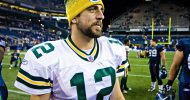
“Mr. Rodgers, I’m glad you’re feeling well. This isn’t altogether unsurprising given your younger age and elite physical fitness (though cases in young unvaccinated people can and have become severe) and I hope you continue to feel well as you quarantine. The medical and scientific community works on data, lots and lots of data. The process of running clinical trials and publishing data is rigorously vetted and peer-reviewed. We do not have good data that supports the use of ivermectin. In fact, a couple of preprint studies have been removed from the internet due to inaccuracy and flaws in their data.
Furthermore, I fear you are missing — and propagating — a very important point. We don’t just get vaccinated for ourselves, but for the greater good. As I’ve said, I’m glad you’re feeling well. As an unvaccinated young, healthy person you pose a greater risk of spreading the virus to the portion of the very young, very old, and immunocompromised population who do not share in your level of fitness than if you were fully vaccinated, especially with the travel required of you and going maskless. Some of these people make up your fan base. As someone who has been part of a team for his whole life, I wish you would see these individuals as part of your larger “team.” We have to all be in this together to achieve our goals of herd immunity just as you have had to work together with your teammates to win games and titles.
I wish Mr. Rodgers a speedy recovery and hope he uses this time to reevaluate some of his recent statements and their possible repercussions. I’ll be watching and cheering on Jordan Love and the rest of the team.”
Allison Neitzel is a physician and public health student.
She shares her story and discusses her KevinMD article, “To Aaron Rodgers, from a physician and Packers fan.”
Did you enjoy today’s episode?
Please click here to leave a review for The Podcast by KevinMD. Subscribe on your favorite podcast app to get notified when a new episode comes out!
Do you know someone who might enjoy this episode? Share this episode to anyone who wants to hear health care stories filled with information, insight, and inspiration.

Hosted by Kevin Pho, MD, The Podcast by KevinMD shares the stories of the many who intersect with our health care system but are rarely heard from.


Transcript
Kevin Pho: Hi, and welcome to the show, where we share the stories of the many who intersect with our health care system but are rarely heard from. My name is Kevin Pho, founder and editor of KevinMD. Today on the show, we have Allison Neitzel. She is a physician and public health student, and she wrote the KevinMD article “To Aaron Rodgers, from a physician and Packers fan.” Allison, welcome to the show.
Allison Neitzel: Thank you so much, and I’m so excited to be here.
Kevin Pho: We’ll get into your article in a little bit, but first off, can you share your story and journey to where you are?
Allison Neitzel: I grew up, just as I said, in Milwaukee, Wisconsin. My mom is a radiologist and my dad is a pathologist, and through a very long, circuitous route, I ended up following them into medicine. I first studied classical music, economics, and pre-med before, so kind of a strange route. But I graduated from medical school in May, and COVID hit while I was a third-year medical student. I was in the middle of my surgery rotation, two weeks into a two-month rotation, and there wasn’t enough PPE. We were hearing the stories out of Italy. I’d seen one patient die, and then all of a sudden we were out, and we were just as worried and scared as the rest of the general population, but with some of the insider knowledge of the medical population.
So I had always been interested in public health and public policy. I did research in global health and social determinants of health locally through the medical school, and I was lucky enough to travel for that and get a publication out of it. And then after COVID kind of upended everything, I was trying to figure out, “All right, I don’t think I can really make an informed decision on what I want to be when I grow up as far as specialty.” I was really curious about a lot of things, kind of realizing that I was going in a different direction than I had originally thought when I came into medical school, but I also had never expected a pandemic to hit while I was in medical school. So I decided to first go get a master’s in public health with a special focus on public policy, and to focus on some of the more systemic issues, especially the ones that COVID had laid bare in Milwaukee. There’s a lot of social inequity and health inequity, and the pandemic really just exacerbated that.
And so I did kind of an about-face in my fourth year, and I added on two extra sub-Is while my friends were celebrating and getting ready for graduation. I did a medicine sub-I at the hospital where my dad works, which was really fun, to be able to go get coffee with him. And then I did an ICU rotation as well, because I wanted to learn more about COVID and how it was being treated, what this patient population looked like, and what the high-level and sometimes months-long care that these patients required looks like. And then I started doing some of my reading on my own about what the long-term impacts are that people are concerned about, and what data is coming out about that.
So this allowed me time away from the pandemic that I think a lot of people don’t have, and time to process all of the terrible things that we had seen, especially as young people coming up. I mean, I think it’s a skill that you learn, to figure out how you process death in these really heavy situations with patients, and all of a sudden it was happening a lot, and we kind of felt helpless.
I’ve always been a Packers fan. I wrote this letter to Aaron Rodgers after he came out with some comments about his alternative treatments for COVID and about not being forthcoming about not getting the vaccine as well. With a lot of the talk that was out there at the time, as I was just processing this, this was a huge shock for me. I mean, this is a guy who is the hero of my home state. I’ve been in patient rooms with many patients wearing his jersey. I have his jersey. I had a sticker of him on my college laptop. I mean, this guy is a big deal. He’s also partnered with my medical school for some initiatives, childhood cancer being one of them, and received an honorary doctorate in medical humanities for his work there. So this is someone who really seemed invested in the community here, and then to hear him say these comments.
You know, it’s not just that he put his own health at risk. As we know with the variants, I mean, the Delta wave hit young people much harder. So he’s putting himself at risk. That being said, he’s a pro athlete. He is incredibly in shape. But also, you know, we’re coming out with the pediatric vaccines for young kids, and he’s kind of the number one guy in the state for a lot of them. And my concern was from a public health standpoint. You know, we’re battling this twindemic of COVID and misinformation, and from an often well-intentioned population, I think.
I empathize with the feeling of fear over the unknown and wanting to read as much as you possibly can, and that’s what I did when I quarantined with my dad. He was working in that hospital as a pathologist, and I was out of the hospital for a few months, and then we went back when there was sufficient PPE. So, you know, we were reading everything all the time. But this DIY research is really scary to me, because as someone who came into the medical field and had to learn how to, you know, write a paper, publish a paper, and critically analyze other papers, that’s not something that everyone knows how to do, because it does require such a critical eye and background knowledge.
And that’s not to say that the people that are reading these articles, and they’re seeing whatever the, you know, miracle fix du jour is, hydroxychloroquine, ivermectin, whatever, and they’re saying, “Oh, look, this works, and I don’t want to get this shot because I’m afraid of this for whatever reason.” But they don’t really necessarily understand that one promising study, and in the case of the ivermectin studies, there’s a great piece by the PhD over at The Atlantic who did the investigative work there. And, you know, he’s far beyond my level of expertise when it comes to analyzing data like that, but, you know, defer to the experts, right? That’s what we do in medicine. We have the same baseline knowledge, but everyone has their own little niche.
And so there’s this kind of attitude that, you know, we’re all really, really frustrated. This has been going on for, you know, the better part of two years at this point. There’s been this kind of turn, I feel like, on health care workers and the health care community, where, you know, people were clapping for health care workers in March 2020, and now I got death threats when I wrote this.
Real physician voices, twice a week
Free, and one click to unsubscribe.
Kevin Pho: In general, if you were to divide up the audience in terms of people who were against it and people who supported it, what was the approximate divide?
Allison Neitzel: The messages that I got from people in the health care community and people who actually know me were overwhelmingly positive. I’m not in the hospital right now, but I obviously have a vast network of friends in residency and, you know, countless doctors that I’ve worked with and who have served mentorship roles for me, both pre-med and in med school. So yeah, I’ve been talking, I’ve been reading, and I’ve been trying to get their message out a little bit for them, because when you work 80-hour weeks, you don’t have the time to think much, much less write out your thoughts. I know what my friends are going through in the hospitals, and, you know, we don’t want a repeat of last year. We’re going into the holidays. And these people have huge platforms, much larger than mine as a, you know, 29-year-old new doctor. It’s really scary. And so the overwhelming positive was from people who kind of understand what’s going on.
The death threats, the calling me a murderer, and, of course, questioning my knowledge because I’m young and a woman and I just graduated medical school, and what do I know about vaccines? In reality, if all I knew about vaccines was that they’re good and Don Lemon told me they’re good, I would not have passed virology, immunology, or biochemistry in the first year of medical school. So it’s from a lot of people who don’t have a medical background and are frustrated. And they’re scared, and they’re not just scared of COVID now. They see this as, like, a government regulation thing.
My attitude towards it has always been, well, I’m from the Midwest. I was educated on the coasts. I worked on the coast as well before coming back. My mom grew up on a dairy farm. My dad grew up really blue collar in Wisconsin. They’re self-made doctors. So I’ve always had kind of a broader perspective on how different people on either end of the political spectrum. And obviously, this shouldn’t be a political issue. It’s a clear-cut public health issue. But it has become one, unfortunately, because of politicians really co-opting this public health mission for their own agenda and getting in the way. I think that’s really where the blame has to lie. But I don’t think that Aaron Rodgers and a lot of the people that don’t want to get the vaccine are bad people. And I think that so much of everything has been so polarizing. Pretty much all of my, you know, 20s, my formative years, have been kind of marked by this huge political unrest and divide, and watching the news every day and just feeling like, “What is happening?”
What’s interesting is, you know, my dad is now looking into retirement and I’m kind of coming up, and we talk a lot about how medical education has changed and the areas where it still needs to. But one thing that’s been a huge success is this patient-centered approach to health care and shared decision-making. And, you know, I think in the past, the medical community has been too paternalistic. Obviously, the irony that my dad’s a doctor is not lost on me. But, you know, we’re taught, when we’re diagnosing or talking about a diagnosis, to say first, “What do you know? And what are your concerns?” And then, “What can I do to help with those?” And then hopefully, at the end of the conversation, and it is truly a conversation, it’s two people talking, they understand, they’re empowered with the knowledge of their condition and their options, and they also feel like they’re being listened to. And you have much better chances of moving the needle when it comes to those important decisions, whether that’s, you know, going on a statin or getting the COVID-19 vaccine and the flu vaccine. Now, everyone, you know, I got mine both at the same time in the same arm.
And so, the people that are angry, and the people that are angry at me now, you know, it’s a small number of people, but loud and scary. I mean, anytime you see people conspiring in YouTube comments to find out where you live, that is deeply frightening, especially since I had never been on a TV interview in my life.
Kevin Pho: So tell me, because this isn’t something that is taught in medical school in terms of dealing with death threats. How did you deal with that?
Allison Neitzel: I think first and foremost, my reaction when I started getting these messages was, “What does this say about people?” Because my whole argument had been, “OK, everybody from both sides, let’s listen to each other.” Doctors need to admit that they don’t, you know, they need to ask what patients know and what their concerns are, and address those in a way that really garners support. There’s a lot of fear of doctors and medicine, and again, it ties into that fear of the unknown. And so people head to the internet to do their own research, and when you don’t know how to critically analyze data, that’s dangerous.
We’re not going to motivate people by, you know, making infographics and saying, “Get the vaccine.” For this population, if they haven’t gotten the vaccine yet, those aren’t working for them. They need people to come and say, “Listen, I get it. I don’t like needles either. I don’t like, you know, getting a sore arm for the next day or feeling like you had a cold or anything like that.” And in this age, everyone has access to the internet all of the time, and everyone has a platform. And so misinformation is much like a deadly virus, what we know about how people propagate disease, and epidemiology. It’s this forward feedback loop, and it goes unchecked, and even people who are just trying to understand, who are scared and are trying their best to do their homework, can fall victim to this. And I think that’s what happened here with Aaron Rodgers. I think it’s happened with a lot of people, and people with huge platforms have to understand the power that their words hold.
I was kind of coached that I would get some sort of negative feedback. There was a veteran reporter at the Milwaukee Journal Sentinel, which, funny enough, is where my grandparents met, who reached out to me on Twitter and said, “You know, I am worried for you.” I posted a picture of that message, and then some of the messages of people trying to find me online, and then for about 24 hours there, I was really scared.
The one thing about social media is, and that’s, you know, where this all started. I posted an open letter on Instagram. I had a Twitter account, but I wasn’t actively using it, and I followed maybe five of my friends from med school and some, you know, med humor accounts. But when I posted this, people came out of the woodwork left and right: friends who work in PR, friends who work in political campaigns, at think tanks, in public health, who have a history of writing op-eds. And, you know, everyone is entitled to their own opinion, absolutely. Not their own facts, but their own opinion. And with that sometimes comes some anger, and I have some friends that work in D.C. and elsewhere on those sorts of issues who did tell me.
I think what’s really important to tell a clinical audience is, if you’re talking openly about anything that is divisive, and in this particular scenario, it’s a doctor from, you know, Wisconsin going up against the hero and reigning NFL MVP, not a position I felt at all comfortable in. But I also had friends who worked a little bit more in the cybersecurity space and helped me really wipe my online presence and keep my personal life safe. I think that gave me a lot more sense of security, you know, with these people that are trying to find me. I’ve had social media since middle school. It’s been a part of my life. And frankly, I think there’s been this whole pushback against the millennials who remember a time before social media, have had it, and have seen some of the ill effects and the mental health issues, especially with young people, and the misinformation. I mean, we’re in the middle of this giant Facebook, or Meta, trial about their overlooking misinformation in the name of profit.
So, you know, I’m posting on one of their apps to say, “I have this weird perspective on this issue that’s fallen into my lap. I’m a Packers shareholder, a Packers fan, a new Wisconsin doctor, and a child of Wisconsin doctors. This is scary, and I want to voice concern.” It’s scary for someone who is fresh out of medical school to be doing that. But I think it was about rallying my people around me who had more experience, just like we do in med school: If you’re interested in a specialty, you seek out mentors. And I got really lucky that, you know, I posted this thinking, “I’ll tag him in, maybe he’ll see it,” and then people really, really came out of the woodwork for me and helped and said, “You know, you really should get this published. I think this is a really interesting perspective. I think it’s very timely, and you have a way with words that is compelling and hopefully can do something.”
You know, Wisconsin’s my home. I’m protective of it. It’s where I grew up. It’s what gave me my medical education and gave my parents their medical education and their livelihoods. There was a lot of conversation about, “OK, how bad is this going to be?” I was interviewed on the local news, and, you know, that’s scary because my face is out there. I did an interview with Medscape, and it’s not been published there. And this morning I woke up to a text from my aunt saying that she was reading the news and CNN had quoted me as a scientific expert alongside the likes of Sanjay Gupta, which is, you know, crazy for me. They are actual, true heroes and MVPs in medicine and public health.
So I think that, yes, I do worry about the safety aspect there. I mean, physicians being targeted is something that, unfortunately, has happened. And, you know, if you watch the “After Tiller” documentary, he’s talking about a different controversial issue, but he was unfortunately murdered for his opinion. But staying silent doesn’t seem like a better option. So first and foremost, it’s talk with people around you, and, you know, if you have a voice and you want to use it, then do it.
I’ve always liked to write. I’ve always had opinions. I always like to do a lot of research. I’m a very curious person, and so I want to know as much as I can, and I’m just like everyone else who’s doing that online and is frustrated, but I have a medical degree. I have classes in public health and policy, and in epidemiology, and all these very timely issues. And so I think it’s also a little bit uplifting that a 29-year-old writing from her IKEA couch is, a week later, mentioned as a scientific expert on CNN. It’s been the wildest week of my life.
And at the end of the day, I hope that that is a message for, especially, younger doctors like myself, and for medical students and residents, that you do actually have an interesting vantage point as observers. We are younger, and we have a little bit more sense of how to appeal to a younger audience. Obviously, you know, people over 65 are very well vaccinated now, but it is a younger audience, and it’s about appealing to them, but also just appealing to the very human aspect of all of this, I think.
And I have a follow-up piece in production, basically saying, “We’re all struggling with this. Can we just take a minute and all stop yelling at each other?” Doctors are burned out, and they’ve seen horrible things, and they haven’t had time to take a breath for themselves, specifically, you know, in medicine, critical care, and anesthesia. But it’s affected my friends in surgery residency, where they’re getting a lot of cases cut and they’re not getting the education that they want, or it’s getting in the way of them treating their patients. Things like that. I think that it’s nice to see that we’re given that sort of platform, and I’m so humbled by it.
Kevin Pho: Knowing the response that you got, if you were to do this all over again, would you?
Allison Neitzel: Oh, yeah. I mean, this isn’t just about Aaron Rodgers. This is a larger issue that ties into what we’re doing in the misinformation age and how that’s affecting health. And I think that, as a, you know, 29-year-old millennial, that is something that I’m actually really interested in on a personal level. And so, yeah, I would absolutely do this again, and I would keep the same people in my corner. And I’m really looking forward to never talking about a public figure in major league sports, specifically an MVP, again. I would like to go back to focusing on the real core issues that underlie it.
The only piece that I guess I would hope for, well, Aaron Rodgers went back on the show, and this was after I posted the letter and after it was on the local news. And so, I don’t know. I haven’t heard from the team. I haven’t heard from Rodgers. I haven’t heard from anyone, and I don’t expect to. I knew that going in. And he made some comments, and it was kind of this about-face where he was very defensive about the decisions that he made. And OK, so he admits that he misled his team, and he’s apologetic and takes responsibility for that. The responsibility that he has does not end there. And I don’t think that the way forward is this very contentious dialogue that is happening right now. It has to be, you know, with these caveats: “Listen, I understand that you’re trying to learn about these things and do these things, whatever.” But I think he needs to take responsibility for the large audience.
It’s not just that he didn’t get vaccinated. It’s not just that he put his team at risk, and obviously COVID spread in the team, and because he was unvaccinated, he was more likely to both get it and spread it. It’s the little kids who were me not that long ago, who really looked up to these people. It’s the biggest team for Wisconsin. And it’s co-opting this message that I’ve kind of tried to get out, of being patient-centered and really, “Let’s listen to each other, let’s love each other,” or whatever he was saying, but then saying, “And then let’s just stop talking about it.” That’s a cop-out. And saying, “Well, it’s a difference of opinion”? No, it’s a difference of knowledge and expertise.
I should not be interviewed on the playbook. I mean, the role that I could best serve on a football team is probably the football. I have absolutely no athletic ability. He has quite a bit, and he’s very good at throwing footballs and doing what he does, and he gets paid a lot of money for it. He gets a lot of fans for it. So when he says something that is this public, then he has to own up for the public. It’s not just that he cost us a game and we lost, and, you know, Jordan Love fought his heart out, and I couldn’t have been more proud to lose that game. I can’t imagine the stress that he was under. But it’s really, really owning up to the privilege of his platform and the privilege of his lifestyle, where he can quarantine in a large mansion and he can afford monoclonal antibodies and all of this testing. I mean, at that point, the testing is horrible. Just get the needle. I had to get tested quite a bit, and at no point was I thinking, “Yeah, I’d rather do this every day than just get the vaccine.”
What I think would be so great would be if we can really talk to these people with much bigger platforms than any of us have and say, “Hey, let’s have a conversation. Let me educate you. Let me listen to what you have to say, and then let me educate you.” You know, he’s already had partnerships with major hospital systems in the state of Wisconsin. Obviously, it made news that Prevea Health, the preventative health system, withdrew their sponsorship of him, but he does have a history with the medical community, specifically in Wisconsin. And so I think it would be a great thing if he would go and talk to these people that he already has relationships with. And then what a message it would be to say, “Hey, we screwed up,” or, “I screwed up. I was trying to do the right thing for myself, and in so doing, I now see why that was wrong, both for me and on a larger scale.” And then partner with these people and these groups to get the message out, you know, get vaccinated, and get the message out to a state that is very blue collar and does not have the privilege of the resources that Aaron Rodgers has.
And I think it’s about owning up anytime you make a mistake. I mean, that’s also a skill you learn in medical school. You know, someone’s medication or prescription didn’t get put in, and you say, “You know what? I realized I made a mistake there. I’m sorry. This is what happened. I take full responsibility. I understand how it affected you, and I’m going to change it.” And I think that could be a really big moment for this kind of last push to get the unvaccinated population vaccinated. And if it’s not Aaron Rodgers, maybe it’s the next guy. Maybe it’s just people hearing someone who, you know, doesn’t look like what they think a doctor looks like, who maybe looks a little bit closer to them, and someone with a different perspective. You know, if it’s not going to change Aaron Rodgers, fine. I can’t do anything. I hope he talks to doctors. I hope he talks to public health officials.
I’m not trying to give vaccines through Twitter, as I’ve been accused of. Also, you don’t need a clinician to evaluate you for the vaccine. You can go to your pharmacy. So I am not doing anything that is, well, I’ve been told it’s a HIPAA violation, that it’s malpractice, that I’m giving medical advice, those sorts of things. I’m just a kid from Wisconsin who really admired doctors in Wisconsin, became one, and wants to make it better, saying, “Guys, we’ve got to get the vaccine.” I want Wisconsin to bounce back too. I know we’re all tired of this.
So, you know, keep yourself safe, but don’t be afraid to speak up. Young leadership in medicine is certainly not there, but it’s lacking in kind of the larger discussions. And I want to go back to school and keep learning and keep writing and focus on the real core issues that I worried about, and I hope that others do too, because I think it’s really good for everyone that everyone gets a lot of perspectives.
Kevin Pho: Allison, thank you so much for sharing your story, time, and insight, and thanks again for being on the show.
Allison Neitzel: OK, thank you so much.
Listen and followApple PodcastsSpotifyYouTubeMore apps · Browse all episodes