












Listen and followApple PodcastsSpotifyYouTubeMore apps · Browse all episodes
In this episode, we sit down with Stevan Walkowski, an osteopathic physician, to discuss the impact of technology on medicine and medical education. With the recent news of artificial intelligence passing the USMLE, we delve into questions about the future of medicine, the role of human interaction in health care, and the importance of bringing love and heart into medical education. We explore the unique position humans hold in the face of artificial intelligence and the ways in which valuing empathy, compassion, and humanity can shape the future of health care. Join us for an insightful conversation with a medical professional who brings a human perspective to the intersection of medicine and technology.
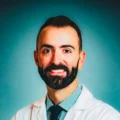
Stevan Walkowski is an osteopathic physician.
He shares his story and discusses his KevinMD article, “From AI to love: the key to a better future in medical education.”

The Podcast by KevinMD is brought to you by the Nuance Dragon Ambient eXperience.
Ambient intelligence augments human capabilities to make our lives easier. The applications are many, especially in health care. Ambient clinical intelligence is offsetting the most pressing challenges in health care today, such as burnout, physician shortages, physician and patient dissatisfaction, and underperforming financial outcomes, by applying the technology to clinical documentation.
The Nuance Dragon Ambient eXperience, or DAX for short, utilizes artificial intelligence and natural language processing to automatically document care. It securely listens to and captures the natural, clinician-patient encounter conversation unobtrusively, and turns that conversation into a clinical note for the clinician’s review and signature directly in the electronic health record. You just talk naturally, and DAX does the rest.
DAX is being used by thousands of physicians across 30 different specialties nationwide. It has already won the Silver Stevie award in the health care technology category and was ranked #1 for improving clinician experience in KLAS’s top 20 emerging solutions.
VISIT SPONSOR → https://nuance.com/daxinaction
SUBSCRIBE TO THE PODCAST → https://kevinmd.com/podcast
RECOMMENDED BY KEVINMD → https://kevinmd.com/recommended
GET CME FOR THIS EPISODE → https://earnc.me/YuePWc
Powered by CMEfy.
Transcript
Kevin Pho: Hi, and welcome to the show. Subscribe at KevinMD.com/podcast. Get CME for this episode by clicking on the CME link in the show notes. Today, we welcome Stevan Walkowski. He’s an osteopathic physician. His KevinMD article is titled “From AI to love: the key to a better future in medical education.” Stevan, welcome to the show.
Stevan Walkowski: Thank you.
Kevin Pho: We’ll get into your article in a little bit, but first off, just briefly share your story and journey to where you are today.
Stevan Walkowski: Sure. I’m an osteopathic physician. I’m a graduate of the Ohio school, and my clinical practice is a specialty in OMM and medical acupuncture, osteopathic manipulative medicine and medical acupuncture. I have characterized it as minimally invasive pain management. I’ve been medical school faculty since 2007, so I guess I’ve been doing this about 16 years, up the ranks to chairman of the department, and now an associate dean. So I’m largely in medical school administration.
Kevin Pho: All right. So as a medical school administrator, what are some current trends that you’re seeing regarding medical school classes and students applying to medical school?
Real physician voices, twice a week
Free, and one click to unsubscribe.
Stevan Walkowski: I guess there are a few, a number. One is, from an osteopathic perspective, there are a number of osteopathic schools, new schools that are online to be brought into the mix, and that increases competition. I mean, medical school is competitive to get into, and every school wants the top students. When we have a number of facilities, we’ll all be competing for the same students. So it’s really important how we position ourselves.
To that same end, one of the things that’s always an issue in medical education is what do you do with the students after the second year. Lining up clerkship rotations for the students in their third and fourth year is extremely important.
A big issue in terms of medical students per se is making sure that they are professional. Our complaints about professionalism are probably the most significant in our students, watching them through the first two years as well as getting them out into years three and four. How they behave as professionals, as new physicians, is extremely important.
Kevin Pho: Now, regarding the professionalism piece, are you seeing some worrisome trends with these recent incoming medical students?
Stevan Walkowski: They don’t have a lot of good role models for professionalism, certainly in the media and in the medical media. TV shows and popular media don’t model good professionalism. So modeling yourself after a Scrubs character or House, I don’t think that lives up to really the standard of the truly honorable profession that medicine can be.
As well, there’s a documented trend in a decrease in empathy. In the first two years, it’s about stable, but it drops off precipitously in years three and four. You could propose a host of reasons why that is, but just recognizing that that’s a big issue in terms of how people are interacting with patients. And looking at the message boards on social media, it’s clear, I feel like there’s an alarming trend of students who are, I mean, they’re struggling. They have a huge debt load. And so their emphasis on specialty and pay, and putting that really ahead of everything, appears, and it is very concerning from my point of view.
Kevin Pho: All right. So let’s talk more about your KevinMD article. We’ll talk more about medical education and that intersection with artificial intelligence. Your article’s titled “From AI to love: the key to a better future in medical education.” Now, tell us, how did this article come together?
Stevan Walkowski: Yeah. I think it’s probably a huge long story that encompasses most of my life, but in terms of the moment of how that article came together, it was an intersection of a number of issues. One is my lifelong commitment to love and to interacting in a loving way with the world. That was coupled with a sense that perhaps I was, I mean, a bit out of my mind in that, and that I was alone.
And then hearing a podcast by Mark Crowley, who runs a podcast called Lead from the Heart. He had somebody on who was a lead designer for PepsiCo, and this man, his name was Mauro Porcini, began to talk about loving your people. He was characterized as a unicorn because he really worked, from an organizational standpoint, with a foundation of love and respect and true concern for his team. And he made the point that that was important: He had a loving environment, and he had tremendous success in his design team.
So that, combined with the issues around medical students and organizational difficulties now post-COVID, and employee engagement, and making sure that we have good morale where we are, and then combining that with a news article in February. It started to get play in the media, which was the success of ChatGPT in passing the USMLE, and a recognition that AI is going to come into medicine, that there are going to be some adjustments that need to be made.
And going back to primacy and saying, we’re not going to be able to beat AI on an intelligence level, but we can come at medical education, we can come at organizational leadership and development, we can come at medicine from a humanistic perspective, from a perspective of greater humanity. And if we start there, by actually loving our people, whether that be our employees or our medical students, and really, from a primary standpoint, coming from that, then perhaps that will lead us to a path where we can bring our humanity to medicine. And that will be an area that AI can never match, because it will never be human.
Kevin Pho: Now, how are you seeing ChatGPT and other AI tools intersect today with medical education?
Stevan Walkowski: Right now, I mean, it’s very early on. It hasn’t really, it’s just gotten play in terms of its ability to succeed and match the intelligence, even though it’s a language learning model. And I think people are sort of almost apologetic in saying, “This really isn’t medicine. This is just, not somebody, but the AI just Googling the information basically that’s out there and answering these test questions.” So right now, it’s not a big player, but it will be, I think pretty definitely, in areas like radiology and pathology, realms that don’t require a lot of human interaction.
And I’ve absolutely heard of the use of AI in the future, which I think is coming soon, in fields like oncology, where a tremendous amount of data needs to be assessed and collated, with recognition of what’s an effective treatment, and to do that very rapidly, and do that with a close eye to the literature. AI could be a big player in that.
Kevin Pho: So you said that one of the ways that we could combat AI is that we in medicine have to come from a position of love. Now, what are some stories or examples or ways that we can do that?
Stevan Walkowski: I think, well, from an osteopathic standpoint, let me just talk about that. We talk about it from an osteopathic, again, manipulative medicine standpoint. So just a brief sort of explanation: Manipulative medicine is the hands-on part of osteopathy. It was the thing that made us distinctive. It’s a palpatory experience. It’s manual diagnosis and treatment.
There’s a variety of ways to apply manipulative medicine, but there are some that really require a sense of connectedness to the individual and a recognition that you bring yourself to the interaction. And I think that’s what’s really unique: You bring yourself to that interaction, and the idea that you apply and connect with the patient in a way that recognizes the innate, I know it’ll sound a little bit bizarre, the innate wisdom of that patient. And you recognize everybody brings their personality, and some people have a lot of trauma that they bring to an interaction, but there is within us that sense of innate wisdom, and allowing for that connectivity. It’s a very vulnerable position. It’s very heart-centered, and to bring that to the interaction, you’re increasing what you do.
Another situation, and I brought this into my article, is as a medical student. Very simply, I just remember sitting with somebody who had a melanoma recurrence. This was many years ago, and just knowing that, in some cases, there’s not a lot one can do, and in this case, this individual, I mean, he was not going to survive. But to just be with him and just to be present, and the recognition that we’re all just human beings on the planet, and we all do better if we join together in this. Just simply being present with him in that moment was about as healing as it could be for him.
Kevin Pho: Now, how do you teach your medical students this approach? Because, as you said earlier, sometimes there’s an empathy gap. There’s certainly concern about the debt load. Now you have the infiltration of machines and AI. What are some specific ways that you’re teaching medical students to maintain this humanity in that doctor-patient relationship?
Stevan Walkowski: That’s a great question. It’s not something that you can teach. It’s something that you can learn. But it really requires modeling. One has to model that behavior. People have to feel loved in order to behave from that standpoint. I mean, there are many, many forces working against that. In many ways, I can’t say, “OK, now practice this way.” I mean, within the college, we’re allowing for mindfulness, and we teach physician self-care, trying to combat the sort of epidemic of physician burnout. But really, it’s a modeling behavior. Students know when people care about them. And we need to care about our faculty and make sure that they understand that they’re appreciated so that they can communicate this as well.
Kevin Pho: We’re talking with Stevan Walkowski. He’s an osteopathic physician. His KevinMD article is titled “From AI to love: the key to a better future in medical education.” So, Stevan, what do you see as the future as AI becomes more, I would say, knowledgeable and more prevalent? How do you see AI intersecting with medical education going forward?
Stevan Walkowski: Yeah, I think the possibility is that, I guess in a perfect world, there might be the opportunity to use AI to our advantage, really, so that we’re not so bogged down with the particulars of the EHR, and we can do it in a way that is streamlined. There was the Blue Ribbon Commission some years ago that basically touted how we would be using advanced practice providers, PAs and NPs, with physicians supervising that work. And so the physicians would work at the top of their degree. And AI probably will have some role to play in that.
But the important thing for me is to recognize that it will only be us as individuals who bring our humanity to that interaction. So it will help us to make decisions better, perhaps, but it will be bringing ourselves to the interaction that will continue helping patients to feel loved.
Kevin Pho: And my final question: Tell us some of your take-home messages that you want to leave with the KevinMD audience.
Stevan Walkowski: Shout it from the rooftops. Love is the most powerful force in the universe, and with keeping your heart open, and staying vulnerable, and connecting with individuals, we really can move mountains. And love your people, whether that be your patients, your staff, your faculty. Absolutely bring yourself to the interaction. Don’t be afraid of it. Don’t be afraid of love. We often treat love as a nonrenewable resource. We’re afraid to talk about it. We reserve it. We only do it for our spouses or our very, very close friends or our family. But love is something that we can share, and it will continue to move through us. It’s not going to go away if we spread it around.
Kevin Pho: Stevan, thank you so much for sharing your time and insight. Thanks again for being on the show.
Stevan Walkowski: Thanks, Kevin.
Listen and followApple PodcastsSpotifyYouTubeMore apps · Browse all episodes