Subscribe to The Podcast by KevinMD. Catch up on old episodes!
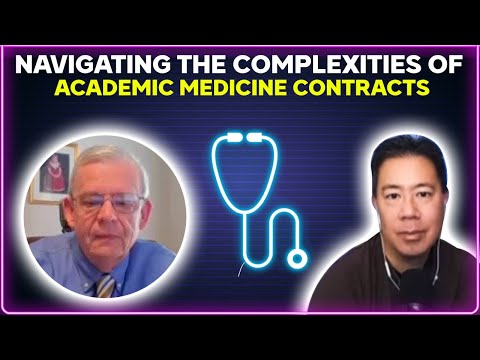
Join us on this episode, where we welcome Dennis Hursh, a physician contract lawyer, to discuss the ins and outs of academic physician employment agreements. Dennis will share his expertise on the common pitfalls and what to look out for when accepting an academic appointment. He will also delve into the key differences between academic and hospital physician employment agreements, the importance of having the appropriate academic title, and the flexibility of compensation packages. If you’re considering a move to academia, this episode is a must-listen. Dennis will provide valuable insights on protecting yourself and ensuring that you’re treated fairly in your academic physician employment agreement. Don’t miss this informative discussion on the world of academic medicine.
Dennis Hursh is a veteran attorney with over 40 years of experience in health law. He is founder, Physician Agreements Health Law, which offers a fixed fee review of physician employment agreements to protect physicians in one of the biggest transactions of their careers. He can also be reached on Facebook and LinkedIn.
He shares his story and discusses his KevinMD article, “Things to know before signing an academic physician employment agreement.”

The Podcast by KevinMD is brought to you by the Nuance Dragon Ambient eXperience.
With a growing physician shortage, increasing burnout, and declining patient satisfaction, a dramatic change is needed to make health care more efficient and effective and bring back the joy of practicing medicine. AI-driven ambient clinical intelligence promises to help by revolutionizing patient and provider experiences with clinical documentation that writes itself.
The Nuance Dragon Ambient eXperience, or DAX for short, is a voice-enabled, ambient clinical intelligence solution that automatically captures patient encounters securely and accurately at the point of care. Physicians who use DAX have reported a 50 percent decrease in documentation time and a 70 percent reduction in feelings of burnout, and 83 percent of patients say their physician is more personable and conversational.
Rediscover the joy of medicine with clinical documentation that writes itself, all within the EHR.
VISIT SPONSOR → https://nuance.com/daxinaction
SUBSCRIBE TO THE PODCAST → https://kevinmd.com/podcast
RATE AND REVIEW → https://kevinmd.com/rate
FOLLOW ON INSTAGRAM → https://www.instagram.com/kevinphomd

ADVERTISEMENT
FOLLOW ON TIKTOK → https://www.tiktok.com/@kevinphomd
GET CME FOR THIS EPISODE → https://earnc.me/rRTIvk
Powered by CMEfy.
Transcript
Kevin Pho: Hi, and welcome to the show. Rate and review at KevinMD.com/rate. Subscribe at KevinMD.com/podcast. Today, we welcome back Dennis Hursh. He’s a physician contract lawyer. His current KevinMD article is titled “Things to know before signing an academic physician employment agreement.” Dennis, welcome back to the show.
Dennis Hursh: Oh, thanks. Yeah, there are really six things that I think are important about an academic physician employment agreement. The first thing that surprises a lot of physicians is that they tend to be really light on provisions. I’ve actually seen two-page contracts, and one time, I had somebody send one to me and tell me he had signed a letter of intent. Could I review the final contract? It was a little awkward. I had to tell him, “No, you signed the final contract.”
So it surprises some people, but literally, it tends to be, “This is your title. This is your department. This is your salary.” And then the fluff: “We look forward to doing wonderful things,” and blah, blah, blah. But then everything else is going to be a policy. “We have a policy on intellectual property. We have a policy on CME. We have a policy on pretty much everything.” I saw a southern university that actually had a policy, and I was impressed. It had a policy on tailgating at football games. I mean, they cover the waterfront.
Kevin Pho: So what was the policy when it comes to tailgating?
Dennis Hursh: Yeah, I forget what the details were, but I was stunned that you could do it, and I think you might get a parking pass at a certain level. It was impressive. But talk about not much that you can negotiate. It’s all separate. So it was kind of hard.
Another thing I’ve seen, and it’s not usually an issue, in fact, I would say it’s rarely an issue, is that your title should reflect your experience. It’s very important in academic circles, and it’s not just an honorific. They have ranges of salaries for all the different titles, and I actually reviewed a physician employment agreement with an academic institution that was going to make her a teacher, or an instructor. They have ranges of salary for all these different levels. So she wasn’t going to be an assistant professor, and literally all physicians should be an assistant professor, with the education and training that you’ve had. And this was a board-certified physician. She wasn’t even coming out of med school, and they wanted to make her an instructor. So titles do matter. People say, “I don’t care about the title,” but you should, just because of the salary range.
Kevin Pho: So give us a sense of the salary differences, say, between a clinical instructor and an associate professor, or whatever the next level up from that is.
Dennis Hursh: It could be as much as $30,000 from the bottom of the range of an instructor to the top of the range of an assistant professor. So it’s significant money. And obviously, it’s going to vary by specialty and institution, but it’s significant.
And as I said, there is a range of salary, and that’s important. A lot of physicians get that first offer, and they say, “This is our standard offer. This is what we pay assistant professors.” And that’s accurate. That is a number, and it’s within the range of what they pay assistant professors, but they do have a range. So generally, you can get them to push that salary up. I use MGMA, the Medical Group Management Association. I like them because they have a whole separate database for academics, and academics make less than people who are purely clinical. So you can look at that and say, “An assistant professor in this specialty,” and depending on the specialty, you may even be able to get the geographic area, “this is what the median compensation is.” And frequently, that first offer doesn’t match that. So there is a range of salary. Yes, there is a standard pay, but it’s not necessarily what they offered you.
There’s usually more flexibility in a signing bonus than they let on. Typically, they do have some more money there, and if you push back a little bit, I’ve had them say, “We can’t go up on the range,” which is possible. They gave you the top of their range. But I have gotten more money in a signing bonus. And at academic institutions in particular, a lot of them I’ve seen want to pay you within 30 days after you start. I have been able to get some flexibility on getting them to pay the signing bonus when you sign, which I don’t think is a radical concept. And I think that’s important. If you’re coming out of training, let’s face it, you need the money now rather than later. But even if you’re an experienced physician, there’s a good chance you might be paying for tail coverage when you leave. And if so, you’re going to need that money before you start. So I’ve had some success getting a signing bonus paid at signing, which again can be very important.
I think one of the biggest things about an academic contract is that it should give you pretty significant administrative time. I’ve seen academic contracts with as little as 4 hours, with 36 patient contact hours a week. That is awfully hard. I would expect that of a pure clinical job. I always shoot to get 8: 32 patient contact hours a week for 8 hours of administrative time. I would say the standard that they start at is usually 8 hours of admin time per week. But if they’re at 4, they had better not be giving you a lot of teaching duties, and it’s going to be hard for you, because they’re going to expect you to be doing research and writing. And if you’re grinding it out just like all the other physicians out there, except then you have all these administrative and research duties, it’s going to be very hard for you. So I would say 32 patient contact hours a week is pretty much the max.
And then one I don’t see often, but I do see, and I think this might be one of the most important, honestly, is that not every contract with an academic medical institution is an academic contract. The fact that you’re signing with the University of the Boondocks and they have a big medical school doesn’t necessarily mean that you’re going to be an academic physician, and that’s important. I’ve actually seen one that was from a well-known academic institution, and they were requiring 36 patient contact hours a week, no clinical title, and really nothing that would indicate an academic role. Pretty much every physician has teaching and administrative responsibilities as part of their job, so they mentioned that: “You might have teaching responsibilities.” But they meant it just like for clinical physicians; you might have a fellow tagging along with you. No academic title and, importantly, pretty much an academic salary. You trade away money for an academic position, but in return, you get administrative time and you get research time. This person was just getting the academic salary, which was much lower, and was basically being a clinical physician. So I think that’s probably the last thing you need to look for. Just because it’s “University of” doesn’t mean that you’re going to be an academic physician.
Kevin Pho: So let’s follow up on that last scenario, and that leads into my question: How much flexibility is there when it comes to negotiating some of these academic contracts? You did mention things like clinical titles and the signing bonus, but for that last scenario that you mentioned, were you able to move the needle?
Dennis Hursh: Yes, we did. We just got them to agree that this wasn’t an academic position. And it’s funny what they said in that case. With health systems, even academic health systems, I don’t have a great deal of trust, but they indicated, “Oh, yes, we’ll move him from this department into the clinical aspect.” I honestly think they were just lowballing and saying, “This is what we pay our physicians,” which again has a grain of truth. It’s what they pay their academic physicians, who get a lot of time for research and other things. So yeah, there is flexibility in that regard. We just come back and say, “This is academic money, but you’re expecting full clinical responsibilities.” So yes, we were successful in that instance in getting a pretty substantial pay raise.
Kevin Pho: So in our prior episodes, we talked about the dynamics in a private practice setting. How do those dynamics change when we’re negotiating for an academic position?
Dennis Hursh: They are much less flexible, generally. And I mentioned there are fewer provisions. Well, that means things like the intellectual property policy, the CME policy, all the things that generally would be in the contract that would be open for negotiation, are kind of closed out. If the contract says that your title is assistant professor, you’re in this department, this is your mentor, and this is what we pay, those are kind of what you’re stuck focusing on. Many times, they will give on the patient contact hours, and I have been successful on that.
Frequently not, but a lot of times, these things are usually for a year, at most two years. Sometimes, you can get them to be a little less inflexible. I’ve had some that basically said, “This contract is for two years, and after that, we expect you to have grants to pay for,” in one instance, “most of your salary.” And that’s a lot of pressure in two years. Once you’ve been writing and researching for a couple of years, yeah, there are grants out there, but you shouldn’t be forced into “go find your salary” shortly after moving into an academic position. So to the extent that that provision is in there, I’ve been modestly successful at making it not quite as onerous.
Kevin Pho: Now, is there a difference when it comes to the size of the academic medical center? Or if that academic medical center is a big name, does that influence how flexible they would be?
Dennis Hursh: Sometimes. I’ve had people say, “This is very prestigious. You have to realize this is very prestigious.” And my counter is, “Well, you must think this physician is pretty special, or you wouldn’t be making an offer.” So yeah, some of the very big, prestigious ones tend to be a little less flexible. But again, they tend to find really, really outstanding physicians, and somebody who’s interested in academics, which isn’t everybody. And you are accepting less income. So they usually have a little more flexibility on salary and things. But they’re harder than the smaller academic institutions, for sure.
Kevin Pho: So for those fellows and residents who may be listening to this and are considering an academic position, you’ve mentioned several times that there is a salary difference. So go into some numbers. What is the actual salary difference between a private practice and an academic position? And tell us in more detail: What are some common administrative responsibilities and hours that they would have to undertake in an academic position?
Dennis Hursh: Well, it’s going to vary by specialty, and it’s going to vary by part of the country. But generally, I see anywhere from sometimes as little as 10 percent, but I’ve seen as much as 25 percent less than the median salary for a pure clinical physician. So the salary change is significant. You’re generally given at least 8 hours a week for administrative work and research. Sometimes, if you have a specialty, they will give you more, and they’ll say, “We want you to continue your research.”
Experienced physicians sometimes take grants with them: “I’m doing a study. I’m the lead investigator. I may be in a private practice now, but if I move over to the university, I’m taking that study with me.” So if they do that, then you have a lot more flexibility in saying, “Here’s the groundwork for the study. You will give me this many hours a week just for this study.” You can usually work fairly comprehensively on your duties, particularly if you’re bringing things into the institution.
Otherwise, you can talk to them, and I won’t say usually, but frequently, they will have some projects sitting around that they were thinking somebody should do. And if you really say, “I want to do more research. Does it have to be 32 patient contact hours a week?” I’ve had several institutions come back and say, “Well, if you want to take charge of this, we can make it 24 a week,” or something. So a lot of times, if you push back, there are things you can do to do more academic work, if that’s your interest.
Kevin Pho: I want to go back to what you said earlier about the academic titles: clinical instructor versus assistant professor versus associate professor. That seems to be a huge deal in terms of compensation. In general, how successful are you at negotiating the initial title that a physician receives?
Dennis Hursh: Honestly, pretty rarely. But most of the ones that I’ve looked at were assistant professors, and they’re generally newer physicians. I’ve had one where, well, I wouldn’t say very experienced, but I think he had five years, and we actually got him an associate professor title. But that’s kind of unusual. Usually, assistant professor is where they want to start somebody, generally even people with significant experience.
Kevin Pho: We’re talking to Dennis Hursh. He’s a physician contract lawyer. His KevinMD article is “Things to know before signing an academic physician employment agreement.” So Dennis, let’s say I’m just coming out, I’m looking for an academic physician position, I have several contracts, and I come to you. You did mention a number of things to look out for, but what would you say are the top three things that I should watch out for when considering the contract?
Dennis Hursh: I think the top three are these. Are you really going to be an academic physician? Because you are going to be paid less than people in private practice or working for a hospital and just doing regular clinical work. So that’s probably the biggest thing.
The second thing is administrative time, because that’s why you’re getting paid less. Don’t accept less pay and then do the same work as somebody who’s not academic. That’s probably the second thing I would look at.
And probably the third thing is just be aware that there is flexibility. Know that when they say, “This is our offer. This is what we pay assistant professors,” that’s all true, but they probably have a range, and they can probably go over it. So don’t feel like everybody in the department has signed this contract. I guarantee you everybody in the department doesn’t have the same salary, even the other assistant professors. And they may have been there longer; there may be reasons for that. But don’t accept, “Oh, no, here it is. It’s carved in stone. You have two options: Take it or leave it.” There’s almost always some flexibility there.
Kevin Pho: And my final question: What are the take-home messages that you want to leave for the KevinMD audience?
Dennis Hursh: Yeah, I think academic medicine is great if that’s what you’re into. I think it’s generally a lot less pressure than being in clinical practice. And let’s face it, we need it. That’s how we’re going to move the needle forward and do medical research. So I think it’s a worthy choice that you’re making. Just be aware that you are going to be giving up income for it, significant income over the course of your career. So make sure that you want to do this.
And also, it’s not really free time. They’re not saying, “We’re giving you 32 patient contact hours, which means you take every Friday off.” It’s “free time,” but they have expectations of research and teaching and things. So don’t look at it as, “If I’m out there, I’ll be working 40 hours a week. Well, you know, it’s 80. But if I’m here, it’s only going to be 64 hours a week.” That’s not free time. You have work expectations during that time.
Kevin Pho: Dennis, thank you again for coming back on the show and sharing your time with us.
Dennis Hursh: It was my pleasure.