Subscribe to The Podcast by KevinMD. Catch up on old episodes!
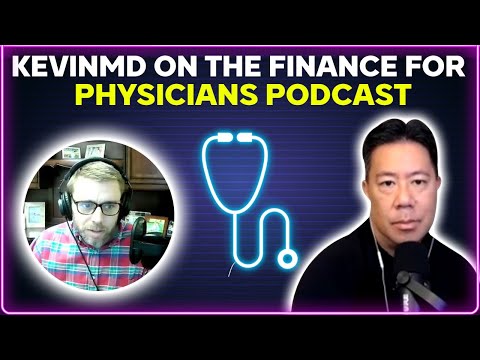
In this episode, I’m on the other side of the microphone. I’m interviewed by Daniel Wrenne on the Finance for Physicians podcast. With reports of 50 to 60 percent of physicians experiencing symptoms of burnout, even before the pandemic, the issue has only become more pressing. We discuss the medical profession’s challenges, including physician shortages, a lack of autonomy and empowerment, and external pressures leading to moral injury.
We delve into the evolution of the medical degree and explore how physicians leverage their MDs beyond clinical care with entrepreneurial pursuits such as startups, real estate, and legal review. Feeding the entrepreneurial spirit and allowing physicians to explore their passions outside of clinical care can help prevent burnout and keep more clinicians in the profession.
Join us for a thought-provoking discussion on the current state of clinician burnout and potential solutions to keep more physicians practicing medicine for the long term.

The Podcast by KevinMD is brought to you by the Nuance Dragon Ambient eXperience.
With a growing physician shortage, increasing burnout, and declining patient satisfaction, a dramatic change is needed to make health care more efficient and effective and bring back the joy of practicing medicine. AI-driven ambient clinical intelligence promises to help by revolutionizing patient and provider experiences with clinical documentation that writes itself.
The Nuance Dragon Ambient eXperience, or DAX for short, is a voice-enabled, ambient clinical intelligence solution that automatically captures patient encounters securely and accurately at the point of care. Physicians who use DAX have reported a 50 percent decrease in documentation time and a 70 percent reduction in feelings of burnout, and 83 percent of patients say their physician is more personable and conversational.
Rediscover the joy of medicine with clinical documentation that writes itself, all within the EHR.
VISIT SPONSOR → https://nuance.com/daxinaction
SUBSCRIBE TO THE PODCAST → https://kevinmd.com/podcast
RATE AND REVIEW → https://kevinmd.com/rate
FOLLOW ON INSTAGRAM → https://www.instagram.com/kevinphomd

ADVERTISEMENT
FOLLOW ON TIKTOK → https://www.tiktok.com/@kevinphomd
GET CME FOR THIS EPISODE → https://earnc.me/sLn8ZP
Powered by CMEfy.
Transcript
Daniel Wrenne: Kevin, thanks for joining me today. I’m glad to have you on the podcast.
Kevin Pho: Thanks for having me.
Daniel Wrenne: Yeah, it should be a fun discussion. I know, Kevin, you have a lot of experience in having conversations with physicians. You’re a trained physician yourself, and so there are all sorts of things I’m sure you’ve gathered from all those conversations and those experiences, and I look forward to our conversation today in regard to that. But before we jump in, I was curious if you could give us a little bit of background for those who aren’t familiar with you and what you’re doing: a little bit of background on where you started and how you’ve gotten to where you are today, doing what you’re doing.
Kevin Pho: Sure. My name is Kevin Pho. I’m an internal medicine physician. I practice in Nashua, New Hampshire, which is a town 45 minutes north of Boston. I do primary care internal medicine, and I’ve been doing this for about 20-plus years at the same practice, a hospital-owned practice. I’m also the founder and editor of KevinMD.com, and it’s a platform where anyone across the health care spectrum can share their stories and amplify their voices.
There’s a lot of need for us to share our stories and what goes on behind the scenes of medicine. We talk about things like clinician burnout. We talk about all the bureaucracy, electronic medical records, and all the things that prevent us from giving the best care that we possibly could to patients. And like you, I have my own podcast, The Podcast by KevinMD, where I have my guest authors come on the show and share their own stories in their own words. So that dual role of being a primary care physician as well as being on social media, having my own site, and being a platform where I can amplify voices has given me a unique perspective when it comes to practicing medicine here in the United States.
Daniel Wrenne: Yeah, and there are a lot of voices. I’m excited to see more. It seems like there are more physicians speaking up; there are a lot more opinions coming out, some of them bad things, some of them good things. I think the state of health care is in a little bit of a challenging spot right now, and there are all sorts of views emerging, and people are trying to come up with solutions and propose, well, I guess really, people are talking about the problem a lot now. I mean, there are a few solutions coming up here and there.
But I’m curious if maybe we could spend a little bit of time on that. I’m curious about your take, given all the experiences you’ve had talking with different people and hearing these voices and opinions and that sort of thing. I’m curious about your opinion of the state of health care and physicians’ work in general. Where are we today, in your view?
Kevin Pho: Yeah, there are so many different directions I can go with that question. So let’s go with clinician burnout, right? I think that even before the pandemic, the share of clinicians who reported symptoms of burnout was about 50 to 60 percent, and I think that number is even higher now. And you talk about things like physician shortages, especially in primary care, and with more of these doctors leaving the profession altogether, who’s going to see more and more of the patients that need to be seen going forward? As it stands now, it takes almost six months for a patient to come in to see me in my clinic, and it’s very difficult to recruit primary care physicians to the Nashua, New Hampshire, area. So that, to me, is one of the biggest problems.
I think that one of the reasons why a lot of physicians are burned out is really just a lack of empowerment, a lack of autonomy. You have a lot of doctors who train 10, 15 years, and they think, after they’re finished training, “I have it made. I practice medicine, and my life will be all set.” And that’s really far from the truth these days. There are so many external pressures that prevent us from giving the best care that we possibly could to patients, and that’s leading to a lot of what we call moral injury, things that are preventing us from practicing medicine the way we want to. That’s causing a lot of frustration, burnout, and ultimately people leaving the profession. So I think that’s one of the more acute crises facing the profession right now. How can we keep more of these physicians and clinicians in practice today, and what can we do about that?
Daniel Wrenne: Yeah, it’s scary to me from my perspective, because we get to talk with a lot of physicians as well and work with some of them a little more closely, and it’s pretty alarming. The percentage of the ones I know and interact with, pretty young physicians, who are very actively working to get out of medicine is a little alarming. As a patient, it’s just kind of crazy. And so I’m not sure what the future looks like, but I’m really curious. I think there have got to be some solutions emerging, and I consider this an opportunity in some ways for more of the entrepreneurial physicians who have creative ideas. I think that’s an entrepreneur’s dream in some ways: They have solutions to problems. That’s what entrepreneurship is. And it seems like there’s a little bit of a trend, or maybe that’s not the right word, but a movement toward more physicians having a voice and then also coming up with solutions and entrepreneurship. But I’m curious about your take on that.
Kevin Pho: Yeah, I think you’re absolutely right. I think one of the emerging themes that I’m seeing on my site and among the doctors I interview is that physicians are more than our degrees. Gone are the days when we have our MD degrees and we just practice in a clinic or go to a hospital or do procedures or do surgeries, and that’s all we do. I think that the evolution of the MD degree has been accelerating over the last few years. We talk to so many doctors who do more than just clinical care. They do, like you said, entrepreneurship. They do tech startups, they do real estate, they do investing, and they do legal review. Just name it; there are dozens and dozens of ways that we can leverage our MD degree outside of clinical care.
I think that doing that takes a lot of the pressure off what we’re doing in clinical care. I think that is a potential solution to burnout, because if we can rely less on what we do clinically, and that’s not to say that we want to leave medicine altogether, but if we could have a hybrid where, on one hand, we can do clinical medicine, but on the other hand, we can do things and explore our passions that fill our proverbial cup, so to speak, we can continue to do clinical medicine longer. I think that’s really going to help with that burnout crisis.
Now, that’s not to say that there aren’t some physicians whose 100 percent passion is taking care of patients, and more power to them. But I feel that for the majority of clinicians, that’s really not the case. I think that we need to prevent these physicians from completely leaving the profession, and one way to do that is to feed that entrepreneurial spirit, and we can talk about how we can do that later on, so we can rely less on some of the clinical aspects of our profession that may be burning us out.
Daniel Wrenne: Yeah, I think entrepreneurship in some ways could be a way out of medicine, but it could also be an avenue to re-create the system of medicine. Because, I mean, I personally think the system’s all jacked up. It’s got a lot of problems, and it’s ripe for a new way of doing things. And so it seems like entrepreneurship is a great example of that. And physicians, too, are so smart. They’re the smartest people I know, and they have all these skills and expertise. What’s sad to me is when I see someone who has this expertise and these skills in an area, and then they go do something completely different. Not that that’s always a bad decision, but if they do enjoy it, or could enjoy it in a different environment, it is a little bit sad to see that. So what are some of the ways that physicians can really lean into that?
Kevin Pho: Yeah, so I think one of the reasons why that is, is that a lot of these other avenues outside of clinical medicine aren’t really taught in medical school and residency. So as you’re training, you’re not necessarily exposed to some of the other things that you could do with your degree. We mentioned things like entrepreneurship and that intersection between technology and medicine, working with perhaps health IT startups. A lot of these alternative avenues for our degrees aren’t really explored just because we don’t have a lot of exposure to them. So when we come out, we think that that’s all we have to do, that all we can do is really just see patients and do procedures and the like.
So in terms of taking that next step, how can we explore doing other things? I think, first off, the number one thing is that you need to rely less on what I call your W-2 income. You need to rely less on clinical medicine as a source of your financial stability, because if you’re a slave to your job, then you have to keep on doing it, no matter what the administration does to you as a physician, and you have to take it because you have, of course, hundreds of thousands of dollars of loans to pay off. You have no other choice. So the faster you can divorce yourself from being reliant on your W-2 income, the more you can cut back on some of the things that may cause some dissatisfaction in your professional life, right? So that’s the number one thing.
I find, and I’m sure that you find this too, that a lot of physicians are not necessarily the best when it comes to managing money. They’re not necessarily the best when it comes to financial literacy and paying down debts. And a lot of doctors, as you know, live beyond their means. They have to live that proverbial doctor lifestyle and buy that big house and a fancy car. And the number one thing that physicians need to not do is that. They have to live within their means. They need to pay off their debts as soon as possible so they can have those options to explore other avenues in case their clinical job is leading them to burnout.
Once they do that, then I think that there are plenty of things that physicians can do in addition. If you look at what I do, that’s certainly one example. I see patients two to two and a half days a week in the internal medicine primary care setting. I do love primary care, and I feel that primary care physicians like myself are needed. Like I said, there is an acute shortage of primary care physicians where I live. It takes months to see me, so I think that I am serving a need. And I do love my patients. I’ve been seeing them for 20 years; I have several thousand patients. But I think if I did this five days a week, that would lead to and accelerate my road to burnout as well. So I’m able to complement what I do by working part time, by doing podcasts, and by doing what I do on KevinMD. I do speaking, and these are things outside of clinical medicine that, again, feed the entrepreneurial spirit and can help me keep on going when it comes to clinical medicine.
Listening to podcasts like this helps. There are plenty of podcasts out there by other entrepreneurial-minded physicians who are financially independent. I’m sure that you’re familiar with the FIRE movement, the financial independence, retire early movement. There’s a whole movement of physicians who adopt that philosophy. They pay down their debts as soon as possible so they are financially independent from medicine, and they’re able to explore these other avenues.
A very common one, for instance, is real estate ownership. You see a lot of physicians who own real estate; they manage properties, they manage portfolios of real estate. So that’s a very common one. I’ve talked to doctors who help attorneys review cases, so that’s non-clinical work as well, and that’s a great way to supplement our income. It’s a nice hybrid to merge with what physicians can do clinically. There’s, of course, expert witness work, content creation like myself doing podcasts, and a variety of other non-clinical jobs with industry, with the pharmaceutical industry. You can work as an advisor for tech startups. So I think the list is endless.
I think that listening to shows like this one and listening to my podcast, The Podcast by KevinMD, helps. There are various Facebook groups that physicians can join that are physician-only, where doctors can talk about some of the ideas for what they can do with their degrees. So I think once you’re financially independent from medicine, there’s a whole new world out there that can keep doctors in medicine longer.
Daniel Wrenne: Yeah, when you start talking about entrepreneurship, the sky’s the limit. It’s like you’ve got a clean slate. That can be intimidating, but it’s also an eye-opening opportunity. You can create your own path in some ways. But at the end of the day, it is a scary proposition, like you mentioned, especially if you’re not financially independent or you just have this fear of taking a big risk or making a change.
I think the scary factor is a big deal, and it’s scary to go against the grain of what you’re told your entire training is what you should do. And then people look at you like, “Really? You’re going to do that? That’s not what people do.” And that’s kind of a big hurdle. I don’t think that means in any way that you shouldn’t do it, necessarily. Sometimes that is a sign that maybe you should do it. But it is a scary thing. I’m curious, because a lot of physicians struggle with that fear, especially early on with the debt, and with getting over that hurdle: Do you think you have to be financially independent to make the jump?
Kevin Pho: Well, it certainly makes it much easier, right? And I don’t think it has to be binary, right? It doesn’t have to be that you’re in medicine or you’re out of medicine. There is certainly a spectrum, and there’s a whole host of approaches one can take. If you want to just cut back one day, for instance, you can certainly do that. So it’s not a binary choice, and like I said, if you are financially independent from medicine, it makes that choice much easier.
Yes, one thing that you mentioned earlier is something I completely agree with: There’s a very linear path when it comes to physicians, and like you said, we’re not exposed to a lot of the alternative things that we can do with our degrees in medical school. So yeah, you’re right. When physicians say, “I’m going to do this instead of medicine,” they’re going to get a lot of puzzled looks from their family members and their peers. So that’s why I think it’s important to join communities of like-minded physicians who are talking about exactly the things that we’re talking about now. They go on podcasts.
I know Nisha Mehta. She’s a radiologist, and she runs a very popular Physician Side Gigs Facebook group, and it’s a physician-only group with tens of thousands of physicians, and they talk precisely about the things that we’re talking about here, other things that we can do with our degrees. So I think that the more we talk about it, the more we normalize it and make other doctors feel that there is a path outside of 100 percent clinical medicine, the more it becomes accepted, and hopefully that’s going to lead to fewer physicians being burned out.
Daniel Wrenne: I think getting involved in social media can help. You have to be careful with social media; there’s a lot of distraction on social media. But in certain realms or communities, like LinkedIn, and I am a little bit more of a fan of LinkedIn, professionally speaking, there are a lot of really solid physicians doing really creative things who are vocal on LinkedIn. Once you tap into who those people are, it opens up the universe, and you realize there are a ton of people doing cool things.
But yeah, the fear is a big deal, and getting over that, I think, is a challenge, but it’s not insurmountable. I talked with Doc G. You know who Doc G is?
Kevin Pho: Absolutely.
Daniel Wrenne: Yeah, and his whole thing is that he worked in hospice for years and has experience working with people at the late stage of life. And one of the biggest things people regret is not leaning into their fears, which is interesting. Oftentimes we get hung up by our fears and don’t take action, but a lot of times, when you feel that fear, that’s a sign that you really need to lean in, to lean into that fear, so you’re not going to end up at a point in your life where you have regrets.
On the other end of the spectrum, in some cases, it’s about pride creeping in, because everybody has this temptation to buy nice things and live into the lifestyle, and you worked hard for it. It’s, “I’ve worked really hard; I deserve to drive a nice car,” and that sort of thing. But the problem with that is, the more you build that up, like you mentioned, it makes you a slave to your work. And that’s another kind of paralyzing position to be in. It’s a little different flavor, but it’s paralyzing if you’re basically completely job-dependent. You have to work to support the lifestyle you’ve committed to, and it can feel paralyzing, probably almost worse than the fear thing. I think if you’re stuck, that’s a tough spot. But it’s all a choice, right? I mean, you can make choices at any point in time to turn in a direction and make a turn for the better, and that sort of thing.
But if you’re speaking to a younger physician who just feels the pressure of all this stuff, I can’t imagine what it’s like to be starting out in medicine, looking for jobs, hearing this negativity about the profession, and thinking, “How do I even pick a job? Where do I go from here?” What piece of advice would you add for them?
Kevin Pho: So one thing is perspective. As physicians, when you compare us to other professions, we’re very lucky. Obviously, we’ve all worked very hard, gone to medical school, done residency, and all that. But when you compare ourselves to, say, the tech industry, you’re hearing in the news that these giant tech companies are laying off tens of thousands of workers. As physicians, we need to realize that we are in a very privileged and blessed position. So when it comes to the job market, relative to other industries, I think that we do have options.
So my piece of advice to young physicians is that we can create the professional life that we want with the degree we have, our MD or DO degrees. With a medical degree, we have the option and the choices to create the life that we want. Don’t fall into the trap of that linear thinking, that because you’ve done 10 years, 10-plus years, of a certain thing, you have to do this as the next step. I think that would be my biggest piece of advice: We have options. You can create the life that you want, whether it’s blending clinical work with entrepreneurial work or blending clinical work with non-clinical work. Create the life that you want. Like I said, physicians are going to be in demand. There are physician shortages all across the nation, and you should be able to choose a job that fits what you want to do. Don’t fall prey to doing something that you have to do.
Daniel Wrenne: Yeah, and ask the hard questions. Don’t let people tell you, “This is just the way it’s always been done, so you’ve got to do it this way.” Push back on that kind of thing. That’s a big deal. Go with your gut, too. I mean, for a lot of people, your gut is your instincts. It typically will lead you or point out concerning things. You’ve got to listen to that, and it’s sad to say that that gets squashed out in a lot of cases.
Kevin Pho: Yeah. Oh, one other thing I want to add is that you’ve got to find your tribe. Like I said, if we’re talking about physicians who are looking for things to do outside of clinical medicine, or blending something outside of clinical medicine with clinical medicine, you’ve got to find like-minded physicians, right? So if you’re in a tribe that only believes that you should be working 100 hours in a hospital, and that doesn’t necessarily align with your values, then you’ve got to find another tribe. And I can tell you right now, there are tens of thousands of physicians who have achieved a hybrid model of their professional career, and I think that they are better off and happier because of it.
Daniel Wrenne: Yeah, I love the quote, I think it’s Jim Rohn: “You’re the average of your five best friends.” And that’s completely true. You’ve got to watch that, too, because look around and you know it. But that’s another choice. You can choose to redirect to a different community. Do you have any suggestions for how to get connected into new communities?
Kevin Pho: Yeah, so I think you mentioned one, LinkedIn. LinkedIn certainly has a lot. I’m very active on LinkedIn as well, and there are a lot of like-minded clinicians there who blend that entrepreneurial spirit with clinical medicine. I did mention Nisha Mehta and her Facebook group, Physician Side Gigs, and the physician community groups there that are physician-only, and again, a lot of like-minded clinicians are there. If you look at Jim Dahle’s The White Coat Investor, as well as Physician on FIRE and Passive Income MD, these are all websites that you can start with. They all have podcasts. There’s a lot of content, but more importantly, it’s a community of like-minded physicians who are doing more with their MD degree.
Daniel Wrenne: Yeah, and if you find people you resonate with, a lot of it is value connection. You mentioned that already: If you can connect on values, that’s a huge starting point. And it might just be buddies you know from training or whatever. If y’all think the same way about how the world should work, that’s always a great starting point. It doesn’t have to be a formal community. It can be just your circle of friends in a lot of cases, and that’s always a good starting point.
Well, as we wrap up, I wanted to know, I’m really curious about your thoughts on the future of medicine. I think there are a lot of promising things happening, but I’m curious about your take. How do you envision the future of medicine? How are things going to play out from here?
Kevin Pho: So again, there are so many different directions in which we could take this: the future of medicine. I think that despite everything that’s going on and all the obstacles that we face, I still think that medicine is a fantastic career choice, right? You make one of the biggest impacts you could possibly make on patients. You have patients who come to you at the most vulnerable time in their lives. You ask them questions that no one else could ask these patients, and you examine patients. It is such a privilege being a physician, and there’s an incredible amount of trust that people place in the profession. So I do think that in terms of making the greatest impact on people and on society, medicine is still a wonderful profession.
I think that we do need to guard against people leaving the profession. So hopefully, as we move forward, we can normalize that conversation, where we can talk about other things that physicians can do with their degrees, and hopefully they can stay in clinical care. And I do think that we need more physicians going into the decision-making roles, right? So one of the things that I advocate for on my website and on podcasts is that we need to share stories, right? We need to share what goes on behind the scenes, because if we don’t, then we risk other people making decisions on our behalf, and these other people may not have physicians’ best interests at heart, right? It could be politicians and policymakers, and they’re not necessarily going to look out for what’s best for physicians. So I think it’s important for physicians to be in those decision-making roles.
So overall, I think that medicine continues to be something that I’m very happy to be in, and it’s given me so many opportunities to explore outside of clinical medicine. I encourage anyone listening to this podcast to go beyond their degree and see where that takes them.
Daniel Wrenne: Yeah, and Kevin’s a great example of someone who has identified a need and a problem and has created a new platform to share solutions, and you’re helping to be part of the solution just in what you do, which is fantastic to see. And so if you haven’t checked out Kevin’s stuff, he’s got all kinds of good stuff out there on his platforms, just examples and stories. You have a lot of great stories, too. That’s always encouraging to see or listen to or read through: other physicians or health care providers going through similar challenges to the ones we’re going through, but then they’re coming out with these great solutions. And there are all kinds of them; you just have to do a little bit of looking. Like I said, Kevin’s site, if you haven’t checked it out, is a great resource for that. So I appreciate you coming on, Kevin. It’s always fun to chat about stuff, and it’s been a good conversation.
Kevin Pho: Thanks a lot, Dan. I appreciate you having me on.
Daniel Wrenne: Thank you.