Listen and followApple PodcastsSpotifyYouTubeMore apps · Browse all episodes
In this episode, we are joined by Harvey Castro, a physician, health care consultant, and serial entrepreneur, to discuss the exciting potential of the generative pre-trained transformer (GPT) in the field of medicine and health care. ChatGPT is a type of artificial intelligence that can generate human-like text and has already gained 1 million users in under a week of being released.
We will explore the limitations of ChatGPT, including the quality of the responses that depend on the quality of the prompts entered and the accuracy of the data used to train the AI. However, despite these limitations, we will also examine the many potential uses of ChatGPT in health care, including personalized treatment plans.
Harvey will discuss the importance of accurate and up-to-date data and the need for measures to protect patient privacy and medical data security.
The potential for ChatGPT in health care is vast, and this podcast will give you a glimpse into the future.
Harvey Castro is a physician, health care consultant, and serial entrepreneur with extensive experience in the health care industry. He can be reached on his website, harveycastromd.info, Twitter @HarveycastroMD, Facebook, Instagram, and YouTube. He is the author of ChatGPT and Healthcare: The Key To The New Future of Medicine and Success Reinvention.
He shares his story and discusses his KevinMD article, “Revolutionizing medicine: How ChatGPT is changing the way we think about health care.”

The Podcast by KevinMD is brought to you by the Nuance Dragon Ambient eXperience.
With so many demands on their time, physicians today report record levels of burnout. Burnout is caused by many factors, one of which is clinical documentation. Studies indicate physicians spend two hours documenting care for every hour spent with patients.
At Nuance, we are committed to helping physicians do what you love – care for patients – and spend less time on clinical documentation. The Nuance Dragon Ambient eXperience, or DAX for short, is an AI-powered, ambient clinical intelligence solution that automatically captures patient encounters securely and accurately at the point of care. Physicians who use DAX have reported a 50 percent decrease in documentation time and a 70 percent reduction in feelings of burnout, and 83 percent of patients say their physician is more personable and conversational.
Rediscover the joy of medicine with clinical documentation that writes itself, all within the EHR.
VISIT SPONSOR → https://nuance.com/daxinaction
SUBSCRIBE TO THE PODCAST → https://kevinmd.com/podcast
RATE AND REVIEW → https://kevinmd.com/rate
FOLLOW ON INSTAGRAM → https://www.instagram.com/kevinphomd
FOLLOW ON TIKTOK → https://www.tiktok.com/@kevinphomd
GET CME FOR THIS EPISODE → https://earnc.me/ptIMsD
Powered by CMEfy.
Transcript
Kevin Pho: Hi, and welcome to the show. Rate and review at KevinMD.com/rate. Subscribe at KevinMD.com/podcast. Today on the show, we have Harvey Castro. He’s a physician, health care consultant, and serial entrepreneur. He’s the author of the book “ChatGPT and Healthcare: The Key to the New Future of Medicine.” His KevinMD article is titled “Revolutionizing medicine: How ChatGPT is changing the way we think about health care.” Harvey, welcome to the show.
Harvey Castro: Thanks for having me. It’s an honor.
Kevin Pho: So we’ll get into your book and article in a little bit, but first off, just briefly share your story and journey to where you are today.
Harvey Castro: Yeah, big picture, I’m from New York City. I’m a first-generation American. I come from a really humble beginning, a beginning that started in poverty, which, actually, I mention because I really think it changed who I am today. And I go into it because it gave me the passion to work in health care and be that physician. And I went into emergency medicine, and I always like talking about that because it brings me to the next point: I love technology, and I love what’s going on out there. My first taste of technology and medicine really hit home when I was in the emergency room.
I had a patient that was coding, and at the time, the first iPhone had just come out. The nurse had a big textbook and was going through the textbook, and then finally got to the drug, and then finally got the medicine and started. And I thought, “This is taking too long. I need something.” So I actually created the first app, which I called IV Meds, and it basically went through the whole algorithm. It was just two touches, and it gave you the dose. And so that’s kind of a little quick background about me.
Real physician voices, twice a week
Free, and one click to unsubscribe.
Kevin Pho: All right, so tell me about that intersection. You are in that tech business world. You’re a serial entrepreneur. So tell me, in terms of being a physician, and I always ask this of physician entrepreneurs, has that background of being a physician helped you or hurt you in your entrepreneurial endeavors?
Harvey Castro: I love that question. Actually, I think it’s helped me a lot, because I understand the limits from a physician’s point of view, and then I can also look at it from the administrator’s point of view and how they see medicine. And then I can look at both and see how I can make that best intersection, because I think sometimes administrators see it without the medicine, and they want to do things that we just can’t or, ethically, we won’t. And so it’s looking at it from the doctor’s side, understanding the science, and creating a new product, and that’s the part that I love. So I think, if anything, it’s helping me.
Kevin Pho: Now, for those physicians who are interested in getting into that tech space, it could be a health IT startup or whatever, what kind of advice do you have for these physicians who want to be more involved in that tech space?
Harvey Castro: Honestly, my biggest thing is it’s just like education. We all work really hard to get that MD, and it took some grit for us to get through it. It’s the same thing with technology: just keeping up and learning, starting with the basics and then going up the ranks. With that said, I would encourage you to be the leader at your hospital, because before you know it, you’re the one reading, you’re the one keeping up to date, and then the administration is going to be coming to you.
Kevin Pho: All right, so let’s talk about your article, “Revolutionizing medicine: How ChatGPT is changing the way we think about health care.” And for those who don’t know, of course, ChatGPT is one of the most highly adopted apps that’s out there, and we’re going to talk about a little background for those who aren’t familiar and how it intersects with our lives as physicians. Now, just to get everyone on the same page, Harvey, what is ChatGPT?
Harvey Castro: That’s such a hard question. I have been asked that a million times, and each time I have a hard time answering. My best example is, think of it as having a conversation with something that you’re currently using. So let’s just say you’re using UpToDate and you’re looking up a patient. ChatGPT gives you the ability to not only just ask the question but personalize that question.
So to give you a quick example, if you have a diabetic patient and you need to understand how to give the patient better advice on the glycemic index, what you could do is go into ChatGPT and say, “I need a diet for this patient. It needs to be low sugar.” But then you can take it to the next step. You can say, “The patient also has allergies to eggs and doesn’t like fruit. Give me a diet,” and it’ll actually make that diet for you. And then, fast-forward, once it gives it to you, you can say, “I need a grocery list,” and it’ll print it out for you. And then after that, you can say, “Give me the restaurants, because this weekend I’m going to be in Miami, and I need to follow this diet,” and it’ll actually tell you what restaurants have that diet. So these are the capacities; it can do more than what Google could do just as a search engine.
Kevin Pho: Now, how exactly does it work in terms of getting this information and formulating responses? How does ChatGPT work?
Harvey Castro: It’s amazing. The database is up to date up to the year 2021. This is the current application. I believe next month or so, there are rumors that the next edition will come, and my guess is it’ll be up to date up until that date. And how does it work? Interestingly enough, it does not go into the internet. You would think it’s just going into the internet and it’s just getting information that way. Actually, it’s going through massive amounts of different databases, and it’s gathering the information that you’re asking it for and literally combining it and putting it into a chat format, so that way you can interact with it.
My biggest warning with it, and I joke with this in a respectful way, is it’s the best salesman in the world, because no matter what you ask, it will give you an answer. The difference is when you get that answer, it could be what we call a hallucination effect. I’m an ER doctor. You can tell me anything, and if ChatGPT says something wrong, I can call it out. But I’m not a dermatologist, so if it went into something very specific in dermatology, I would look at it and say, “Yeah, looks good to me,” but a dermatologist would read it and be like, “No, this is totally incorrect.” And so it’s just fascinating to me how this technology is being used right now in medicine.
Kevin Pho: Now, you’ve already written a book on this, “ChatGPT and Healthcare: The Key to the New Future of Medicine.” ChatGPT only came out at the end of November, and you’ve already written a book about it, so you’ve clearly thought about the massive implications that ChatGPT has on health care. So give us a high-level overview. What are some of the high points in terms of how it’s going to affect our lives as physicians?
Harvey Castro: Yeah, I think there’s a difference between what we can do today and what we can do tomorrow. So from 10,000 feet, I wanted to just introduce the subject so that physicians can start spending time thinking about it. I feel like some of us in health care take a little bit of time to adjust to new technologies, and I knew that this was going to end up taking a big portion of what we call health care. And so, with ChatGPT, the simplest way I see this done is as education. Every 72 days, medical knowledge doubles, and so being able to go into a database, ask it questions, and have it answer those, I think it’s a plus.
And so I’ll take it to a real example. I’m meeting with different medical students and providers, and they’re saying that for medical school, they’re putting in maybe a PDF of a chapter on cardiology, and it’ll summarize the chapter and give them the high points. It’ll make tables for them. It’ll make flash cards for them.
For practitioners, I got a great example the other day. I met with a pediatric cardiologist. He said that he was able to diagnose this patient, and there were only 200 cases in the whole world with this. And he, for giggles, wanted to put all the symptoms that he saw in the patient into ChatGPT. He put in the symptoms and the prior imaging studies, and it came out with the diagnosis. And he was shocked, because he said, “Harvey, this is something,” and he even mentioned the disease to me; I can’t remember it myself right now, but it was something so rare. And I thought, you know, from the point of view of it, it’s not going to replace a human, I don’t think, but I think it will help supplement. And, you know, unfortunately, doctors can’t know everything, and so that’s why we all specialize. But then, being in our specialty, it changes so much. How nice would it be to use that tool? So that’s what I’m seeing a lot of right now.
And then one more example, on the ER side: I work close to an airport, and at the airport, we were getting people from all over the world, and unfortunately, my EMR didn’t have the discharge instructions for that language. And so again, I mean, I’m not putting anything that’s HIPAA into this, obviously, and there are 18 identifiers. I could go in, put in the diagnosis, and say, “This is the person’s language,” and it would translate, and then I could hand that to the patient. And I thought, what an amazing tool that I could use for my patients.
Kevin Pho: What is it specifically about ChatGPT that makes such an impact? Because there’s just so much technology that’s introduced to physicians, and it ends up not making a difference. What’s special, specifically, about what we call generative AI, of course? What specifically about generative AI do you think is going to have such a big impact on our lives, in contrast to some of the other technological innovations?
Harvey Castro: I think it’s because it can adapt, and medicine adapts so fast, and the fact that this technology can adapt faster than we can recall a lot of these subjects, I think that’s one big one. I think, in my opinion, health care from a physician-patient point of view is a lot about education. You have an education on a certain disease, and you’re passing that education to a patient and helping them change their practice, or change their practice health-wise. And so I think ChatGPT can help you on the patient side and the physician side.
Let me give a quick example. If we talked about the physician, what about the patient? What if the patient knew they have diabetes? They’re following up with you as a primary care doctor, but then they could say, “What are the best questions for my doctor, and what are the follow-up questions?” And then, going into the physician-patient relationship, they usually only get 13 minutes as a national average with the doctor. What if those 13 minutes were so high yield that they had these questions from ChatGPT and said, “Hey, this is what they said. Here you go. Do you bless this?” Now you’re really creating an environment, and I foresee that being in the future.
I foresee websites and APIs that will go out with ChatGPT, that will integrate with basically computer systems and websites, but then a patient can go ask those medical questions, and then ChatGPT will generate the answer. But then there’ll be a human being, a physician, who will read it, bless it, and send it back to the patient.
Kevin Pho: That brings us to the point about accuracy, right? So a lot of physicians, or patients for that matter, if they’re asking ChatGPT for medical advice, medical information, if you give it a constellation of symptoms, it’ll give back potential diagnoses. Comment about the accuracy that you’re seeing with ChatGPT as it relates to health information.
Harvey Castro: Well, it’s a hard one, because I can only comment on things that are in my space, and I think that’s a very important statement, because other physicians out there may be blessing medical knowledge from ChatGPT that may not be in their space. No disrespect to those physicians, but it may be so specialized of an answer back from ChatGPT that they may not recognize that it’s in fact an error. And so I’m always cautioning patients, especially patients outside the United States, because I feel like people outside the United States can self-diagnose and then go straight to a pharmacy, pick up medication, and take the medication. And what if it’s the wrong medication? What if it’s the wrong disease? What if there’s an allergy? I mean, there are a million things.
So from an ethics point of view, I think this has got to be taken with caution, and that’s why I want to educate both physicians and patients on how to use this tool correctly. Because my bigger worry is, if there’s a negative outcome out in the world because of ChatGPT, then it’s going to delay the progress, and it’s going to end up hurting people in the long run, because we cannot use this technology.
Kevin Pho: Talk about the company behind ChatGPT. It’s a startup called OpenAI. I know Microsoft has invested billions of dollars in this. In terms of all the information that we’re putting into ChatGPT, privacy, HIPAA, how are they using what we’re putting in? Is this something that we need to be concerned about?
Harvey Castro: Of course, yes. And I tell every doctor and patient, please do not put anything in as far as your personal information. And I didn’t even know this until recently: I didn’t realize that when someone passes away, up to 50 years later, that information cannot be shared. And so please don’t put anything on the ChatGPT servers.
Just to give you a quick background, OpenAI originally was supposed to be open, and Elon Musk and other billionaires put money into it because their goal was to keep this independent from the private sector. Microsoft came along and invested. I believe they have about 49 percent ownership right now. And so now, to me, it’s not really open; it’s more a Microsoft product. And so with that said, from an ethical point of view, it kind of changes things, because now this isn’t open. Now it’s endorsed by a company. Now it’s going to be looked at as a product, and it’s got to create financial gains. And so from an ethical point of view, I worry that perhaps people that don’t have the funds for this technology will not be able to get it, and those that have the funds will be able to use it and be able to do better at work, or maybe eventually get better health care. And so from an ethical point of view, it’s an interesting question to just kind of think about.
Kevin Pho: So I’m a primary care physician. I do internal medicine. I see patients three days a week. Do you see any application for ChatGPT in the exam room, in a typical office visit with a physician?
Harvey Castro: Yes. I’m working with some companies, and what they’re doing is creating an independent server, so that way all that information is not going back to the main database. They’re basically creating what I call a mini ChatGPT server. And so what they’re wanting to do is, for example, you would see a patient, and the patient would give you different symptoms. Then two things would happen: ChatGPT could interact with the patient, and it can create summaries, so the next time you see the patient, it could go back to the last 20 times and give you a one-page summary of all those visits, and then anything more that you want, it can do. I know you already have that, but this will be a better summary.
Other applications I love are just the medical education portion. So on the discharging of these patients, you can customize. When you discharge a patient who’s 80 years old with diabetes versus a person who’s maybe 18 years old, your therapy may be different, and your advice may be different. And so because of that customization effect through ChatGPT, that is a way that it’ll be used. I think, fast-forward, I don’t personally think it’s going to be ChatGPT. I think it’s going to be BioGPT, and that’ll be another article in the future that I’m going to write about. But I think that’s what’s going to be the future in health care.
Kevin Pho: We read about the potential threats to some jobs that ChatGPT may bring. Is there anything that physicians need to be worried about going forward in terms of ChatGPT improving to a point where it may infringe on some physician responsibilities?
Harvey Castro: I love that question, and I see a lot of debate about that question. I personally do not see it taking our jobs away, at least in my lifetime. I see it more that those that understand this technology and are being efficient with this technology, those are the ones that are going to eventually be hired by the bigger hospital systems, and they’re going to want those to be promoted. And those physicians that are resistant to change, that do not want to use these tools, I think those doctors eventually will not have a job, and in that sense, they will be replaced, but not the way we’re thinking, by a computer. It’ll just be by another person that’s using it.
And I see this more as an assistant. For example, I’ve worked 30-hour shifts in the ER. I know at four or five in the morning, I’m really exhausted. I’m doing my best to give my best care, but how nice would it be to have a peripheral brain, just like we have on our mobile devices? Why not have that resource where I can say, “You know what, I’m on the fence,” and it’s already integrated into the EMR, and it’s showing me, “OK, the patient’s had chest pain five different times, this and that. Here’s your differential diagnosis.” And I look at it, and I’m like, “Actually, there is one on the list here that I haven’t really ruled out. Let me order this following test.” Or, “You know, I was on the fence. I wasn’t going to order this, but the computer is really saying there’s a 90 percent predictive value that this is probably the diagnosis, and I may be missing it. Let me order these tests, or let me actually double-check.” I think that’s how it’s going to end up being used.
Kevin Pho: We’re talking to Harvey Castro. He’s a physician, health care consultant, and serial entrepreneur. His book is titled “ChatGPT and Healthcare: The Key to the New Future of Medicine.” We’re talking about his KevinMD article, “Revolutionizing medicine: How ChatGPT is changing the way we think about health care.” Harvey, I know that there have been some seismic changes. ChatGPT has only been here for about three to four months now. Normally I ask what the next year will bring, but generative AI is moving so quickly. What are the next few months going to bring?
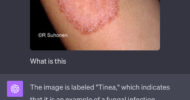
Harvey Castro: Honestly, there are lots of rumors. Now they’re going to add images to ChatGPT, and when that happens, and again, this is rumors, I believe it’s going to revolutionize medicine, especially dermatology. And let me give you a quick example. If you could put in symptoms and a picture of a mole, or a picture of a pathology, and ChatGPT is able to look at those factors and turn around and say, “It’s possibly this,” then, I know that already exists out there in some companies, but I think this is going to change that. And then, fast-forward, if I can show a picture of you to ChatGPT, and it turns around and says, “OK, here’s his website, here’s everything,” those are the things that are coming. And imagine all the medical applications that can come from that. And that’s with ChatGPT-4, and I really think that’s going to happen this year.
Kevin Pho: And my final question: Tell us some of your take-home messages you want to leave with the KevinMD audience.
Harvey Castro: Honestly, at the end of the day, I just want everybody to keep up with technology. I know some of us are resistant to change, but just learn about it. My take-home message is there’s nothing wrong with just reading about it and learning about it. And so that’s basically it: Stay up to date.
Kevin Pho: Harvey, thank you so much for sharing your time and insight, and thanks again for being on the show.
Harvey Castro: Thank you.
Listen and followApple PodcastsSpotifyYouTubeMore apps · Browse all episodes