Listen and followApple PodcastsSpotifyYouTubeMore apps · Browse all episodes
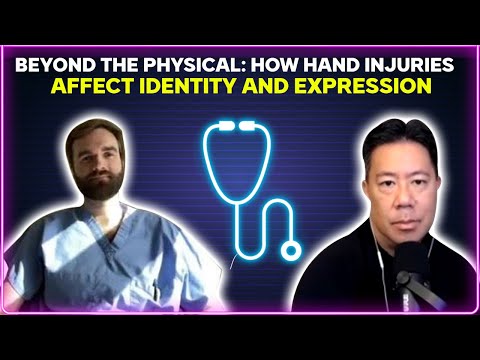
In this episode, we’re joined by Peter T. Hetzler, a plastic and reconstructive surgeon, to discuss the importance of the hand in human identity and expression. In the U.S. private sector, hand injuries were the second most common workplace injury in 2019. They often significantly impact a person’s livelihood and ability to express themselves. We’ll explore the connections between hand injuries and mental health, the role of hand gestures in communication, and how treating hand injuries must involve a focus on mental illness and coping strategies. This is a conversation you won’t want to miss if you’re interested in understanding the significance of our hands in our daily lives.
Peter T. Hetzler is a plastic and reconstructive surgeon.
He shares his story and discusses his KevinMD article, “The impact of hand surgery on human identity and expression.”

The Podcast by KevinMD is brought to you by the Nuance Dragon Ambient eXperience.
With so many demands on their time, physicians today report record levels of burnout. Burnout is caused by many factors, one of which is clinical documentation. Studies indicate physicians spend two hours documenting care for every hour spent with patients.
At Nuance, we are committed to helping physicians do what you love – care for patients – and spend less time on clinical documentation. The Nuance Dragon Ambient eXperience, or DAX for short, is an AI-powered, ambient clinical intelligence solution that automatically captures patient encounters securely and accurately at the point of care. Physicians who use DAX have reported a 50 percent decrease in documentation time and a 70 percent reduction in feelings of burnout, and 83 percent of patients say their physician is more personable and conversational.
Rediscover the joy of medicine with clinical documentation that writes itself, all within the EHR.
VISIT SPONSOR → https://nuance.com/daxinaction
SUBSCRIBE TO THE PODCAST → https://kevinmd.com/podcast
RATE AND REVIEW → https://kevinmd.com/rate
FOLLOW ON INSTAGRAM → https://www.instagram.com/kevinphomd
FOLLOW ON TIKTOK → https://www.tiktok.com/@kevinphomd
GET CME FOR THIS EPISODE → https://earnc.me/M9mTe4
Powered by CMEfy.
Transcript
Kevin Pho: Hi, and welcome to the show. Rate and review at KevinMD.com/rate. Subscribe at KevinMD.com/podcast. Today on the show, Peter Hetzler. He’s a plastic and reconstructive surgery resident. His KevinMD article is titled “The impact of hand surgery on human identity and expression.” Peter, welcome to the show.
Peter T. Hetzler: Thank you for having me. I really appreciate it.
Kevin Pho: So we’ll get into your article in a little bit. First off, briefly share your story and journey to where you are today.
Peter T. Hetzler: Sure. So I grew up in New Jersey. I’m the son of a plastic surgeon and an ED nurse. I went through high school, college, and med school in the New England area, and then I found myself at the Georgetown plastic surgery residency program, where I’ve developed an interest in hand surgery specifically. We rotate at Union Memorial Hospital, which is where the Curtis Hand Center is, and during my time there I became really interested and passionate about hand surgery, and not only the surgery itself, but also the way you interact with patients, in a way that is a little bit different than other aspects of plastic surgery.
Real physician voices, twice a week
Free, and one click to unsubscribe.
Kevin Pho: Tell us more about that. So that interest in the hand, how does that differ from the interactions with other patients?
Peter T. Hetzler: Yeah, so I think in a lot of other clinic scenarios in plastic surgery, patients generally come in knowing what’s going on and what they want. So, for example, someone may come in with large breasts for a reduction mammoplasty, and all we need to do is make sure that the indications are appropriate and that they’re a good surgical candidate. That’s really not true for all plastic surgery clinic scenarios, but I found that, especially with some breast cases and other things like that, you weren’t doing much of the history and physical that you would normally learn about in medical school. But in hand surgery, someone comes in and they have nonspecific pain in their hand or something else going on in their upper extremity, and you really have to dig in, get a full history, and do a full physical exam, and you can actually really figure out what is going on with the patient with just those two modalities. It’s the classic teaching of how important the history and physical is.
So that really spoke to me once I was dealing with these clinic patients in the hand office. The other thing that I really liked was that I worked with a surgeon there, Dr. Ryan Katz, and he has such a focus on the psychosocial component of how hand injuries and hand problems affect these patients. That really spoke to me as well, and it led me to think about how hand surgery and hand issues really impact the human experience and human identity, which led to the article that I wrote.
Kevin Pho: Yeah, we’re going to talk about that article, but before we do, for those who aren’t familiar with hand specialists, give us a sense of the complexity and nuances specifically with the hand.
Peter T. Hetzler: Yeah, so a lot of times, the hands are one of those things where really no one is going to deal with them or touch them in any specific way unless they’re trained in hand surgery. It’s one of those areas, kind of like the face in that way, where people will send it to the specialists. Another thing about the hands is that, after the face, they’re the second thing people will look at to determine if someone has a normal appearance. So people really focus on not only how the hands move but how they look.
The other thing about it is that any problem with the hand, bony, soft tissue, malignancy, basically anything in that area, forearm to hand, is going to be taken care of by a hand surgeon. So when you do your fellowship, you learn all the various aspects of it, the vascular, all of it. And the problems that the hand has can be anywhere from nonspecific pain to full amputations. So you run the gamut of all the surgical complexity and, honestly, the medical complexity of doing injections in clinic, doing conservative therapy with splints, and referring to psychologists and pain management specialists for these patients who have had trauma, to learn how to deal with it and come up with coping mechanisms to help them get through this hand issue. Because a lot of times, surgery is really not the right thing for them.
People will come into our office and say, “Hey, you guys are hand surgeons. I want you to fix me with a surgery.” And it’s really our job to, one, determine if surgery is even an option for them and, two, if it’s not, really talk to them about ways that we can help them that are nonsurgical. That was another part of hand surgery that I really loved: Yes, we do surgery when needed, but on the other hand, it’s a lot of having a conversation and determining why these patients are feeling this way and what else is going on in their life, maybe depression, anxiety, chronic pain. Those things all come into one global picture of the patient, and you come up with the plan for them based on that.
Kevin Pho: All right, let’s talk more about that. Your KevinMD article is titled “The impact of hand surgery on human identity and expression.” So you were getting to this a little bit earlier. Tell us more. How did this article come together?
Peter T. Hetzler: Yeah, so like I said, I was a second-year resident, currently a fourth-year now, and it was my first time at Union Memorial, and we take a fair amount of hand call there as a junior resident. I was taking hand call on, I think it was a Saturday, some weekend day, and we got a message from the chair, Dr. Higgins, about a plastic surgeon in the D.C. area who was coming in with what sounded like a median nerve laceration on his dominant hand. For any surgeon, that’s devastating.
The patient ended up coming in, and I evaluated him. Before I had even started the interview, one of the first things that that specific physician said to me was, “Be honest with me. Do I need to find a new profession? Do I need to change what I’ve been doing?” I think that moment spoke to me about how precious and how influential the hand is to someone’s identity.
I talk about this a little bit in the article. In a society like the United States, where work and identity are so related to capitalist society, your identity, your career, all these things, when you meet people for the first time, you’re saying, “Oh, what do you do?” Because your identity is so tied to what you do and how you interact with the world, the hand is just so important to that. One of the big jobs that we have in America is manual labor, and “manual” literally comes from the Latin meaning hand. So I talk a little bit about that in the article.
I go on to say that because we are doing surgery, we’re literally limiting the hand. After surgery, we have to immobilize the hand, we have to put patients in splints, and we’re literally taking away patients’ ability to interact with the world and express themselves. That’s going to just depress how they interact with people and how they see the world, and so any underlying chronic pain, depression, anxiety. We talk a lot about how, for people who are on workers’ comp and have legal issues going on, a suit going on, the outcomes tend to be pretty bad until that suit is done. Once the suit is done and the patients don’t need to worry about it anymore, their rehabilitation and their outcomes start getting much better.
So there’s this tie between the psychosocial impacts of the injury and the injury itself. We can cure the injury, we can fixate the bone, we can close the soft tissue, but if there’s a disconnect and the patient is having other stresses and doesn’t have the ability to cope with the disease process, cope with the trauma, or they don’t have a support system, the outcome is going to be so much worse than for someone who does have those things. And through my interactions and working at the Curtis Hand Center, they have a psychologist on staff in the office specifically for these reasons. So that whole journey that I went through as a second-year really showed me how important it is, when you’re a surgeon, not just to be able to operate but to be able to recognize and identify these things, and then to go the right routes, the right things to say, the right pathways for these patients who need additional help rather than just surgery.
Kevin Pho: So walk me through this psychosocial process in your hand clinic, because patients may not even be aware of how directly correlated their upcoming hand procedure is to the various psychosocial things that you just mentioned. You mentioned that you had a psychologist who talks to them about the potential impacts. Just walk us through the process from beginning to end in terms of how you incorporate some of those psychosocial implications into their upcoming hand procedure.
Peter T. Hetzler: Yeah, so a lot of times, when you walk into the room, and Dr. Katz talks about this and I’ve learned from him, you can almost immediately tell. Any physician will know this. You walk into the room and you can get a sense of the patient’s demeanor, how they’re feeling, how they’re interacting, and just basic social cues. Normally, when you walk into a room and you talk to a person, you’re like, “Hey, how’s it going? How are you?” And normally, following the social norm, it’s, “Hey, doctor, I’m doing well. I have this thing going on.”
Other times, when you walk in, there’s something off about the interaction. You walk in, “Hey, how are you doing?” “Well, I’ve had this thing going on for such and such time. I just need help.” Something clicks where you’re like, “OK, there may be something else going on.” Now, it’s not always the case, and you certainly don’t want to put any bias onto these patients who may need help, but it’s something that just clicks in your mind, and you say, “OK, there may be something else going on that I may need to pay attention to.”
Now, you do the normal history and physical and you do all these things. Let’s just say somebody comes in with nonspecific hand pain that we can’t really help with surgery, because a lot of times surgery will just make it worse. If we’re trying to treat pain with surgery, you’ve got to be very careful about that, and you have to make sure the indications are right, and more often than not, there are no indications for surgery.
So if somebody comes in with nonspecific hand pain, you do a whole history and physical, and then you inquire about what’s going on. “Hey, do you have help at home? How long has this been going on for? Do you have any history of mental illness, depression, anxiety? Do you feel safe at home?” If it’s workers’ comp, is there litigation going on? So you just need to take a step back from your surgeon viewpoint and really get into understanding what is going on at home, how work life is, and whether there are any additional stresses from drugs and alcohol, anything that may change their ability to cope with and deal with a problem or pain.
Then, once you interrogate that and figure it out, they may say, “No, nothing.” You say, “Well, surgery is not really good for you. We can try some conservative measures. We can try injecting some steroids and see how it goes, and then you can come back and we can continue our conversation.” Or, if you identify some of these things, you can offer, “We have this psychologist who helps with these things, with chronic pain, specifically with the hand, with determining some good coping mechanisms,” and you can offer that to them as well. That’s the flow and the way that you can think about these patients who may have a more complicated psychosocial situation that you really need to drill down on, because that’s what’s going to really help them and get a good outcome, rather than just operating on them.
Kevin Pho: Now, how about in a primary care setting? What are some common hand issues that primary care clinicians like myself see in clinic, and perhaps clue us in on some of the psychosocial impact of common primary care hand conditions?
Peter T. Hetzler: Yeah, I think arthritis, rheumatoid arthritis, osteoarthritis. The most common one is thumb CMC arthritis, which is very common, and obviously there are surgeries that we can do for that. Then there are nonspecific ligamentous soft tissue injuries. A lot of times, people will come in and say, “I’ve had this pain for years or whatever. I can remember that I had some sort of trauma, and then it kind of comes and goes. There are sparks and pains.” A lot of times, we end up just saying, “We can try these conservative things, like a splint or anything, but you are going to have to learn to live with this pain.” Ligamentous injuries heal much slower and not completely compared to bone, and they’re the ones that linger forever, for the rest of your life.
I myself have some ligamentous injury from running track in college, and I still get pain there. It’s one of those things that you just won’t ever get rid of. I think some patients have this idea that we can get rid of pain, like pain is something that we can get rid of: “It’s what we’re here for, doctors. You get rid of pain.” I think it’s really important early on in the clinical encounter to really be up front and say, “Look, we don’t operate for pain. Almost always, we can’t get rid of pain 100 percent of the time. It’s something you may have to live with for the rest of your life and come up with mechanisms to deal with. We can certainly help along the way, and we won’t abandon you in any way, but it’s just the reality of the issue or the trauma that you have.”
Kevin Pho: Now, what kind of symptoms would require us to refer patients to hand specialists like yourself?
Peter T. Hetzler: Yeah, I think obviously anything that you all don’t feel comfortable with, we’re happy to see. I mean, we trained in this, so we are absolutely happy to see it. I think anything that causes a functional deformity, so anything that limits their ability to use their hands, any masses that you’re suspicious of, pain, anything that’s really going off in your head, like, “I’ve seen a lot of this stuff, but it just doesn’t sit right with me.” And obviously, any fractures, we’re happy to see.
Kevin Pho: What about ganglion cysts? Because those are actually the most common things that I see.
Peter T. Hetzler: Yeah, I mean, with ganglion cysts, there are a couple of different options that we offer when we see a ganglion cyst. We say, “Hey, this will come and go. We can take it out if it’s bothering you. We can also try to use a syringe, suck out all the stuff, and see how it does. We can put you in some compression and some kind of splint and see how it does. We can do surgery, or we can do nothing.”
So I think if they have a ganglion cyst, and you’re thinking this is a ganglion cyst, and it does not bother the patient, they’re totally fine with it, and it doesn’t cause any functional deformity or any pain, we don’t need to see it, and you should feel comfortable just having them come back if they have an issue. If they want surgery, if they want something done, or if it causes functional deformity, pain out of proportion, or it limits their ability to move, that’s definitely something that we should see, because we could take it out, or we could suck it out, or whatever.
Kevin Pho: Now, how about specific questions that we can ask patients in the exam room to inform them about the psychosocial implications of their hand condition? What specific questions do you ask, or what specific questions should we ask patients?
Peter T. Hetzler: I think getting a history of any pain syndromes in the past. “Do you have a high or low pain tolerance?” I think just asking general questions about their mental health, the normal depression screen: “Do you enjoy things that you normally do? Do you feel safe at home? Do you have support at home?” I think anything to get a sense of what their social support is, and honestly any way to get an idea of their ability to cope with things and understand medical issues. I think getting a sense of their medical literacy can also be helpful.
And I think talking about how their pain is something that, unfortunately, based on certain traumas and things, they’re just always going to have. And you can mention, “We can certainly send you to a hand specialist, but they’re probably going to say the same thing.” So I think just trying to get a sense of their background, their support system, how they think about issues, or how they’ve dealt with medical issues or medical problems in the past can key you in to how they may deal with pain or trauma or those sorts of things.
Kevin Pho: We’re talking to Peter Hetzler. He’s a plastic and reconstructive surgery resident. His KevinMD article is titled “The impact of hand surgery on human identity and expression.” Peter, tell us some of your take-home messages that you want to leave with the KevinMD audience.
Peter T. Hetzler: I think a big take-home message that I’d like to say is that historically, surgeons have been known as technicians. They have poor bedside manner. Everyone knows the stereotype about that. And that’s not to say that there aren’t surgeons who are like that, 100 percent, and there are people like that in every specialty. But I think the take-home I want to see is that surgery is a lot more than just operating. It’s having a conversation with your patient, developing trust with your patient, and really determining if surgery is what is in the best interests of the patient. You really have to drill down on the indications for the procedure, because it’s easy to operate, but it’s hard to say no. That’s probably the most important thing, learning when surgery is not the best option and helping your patients through that decision-making process. And once it’s done: “We may not have surgery, we may not be able to offer surgery for you, but we have these other things. We can send you here. We can see you back in a couple of weeks and see how you’re doing.”
I think that’s something I definitely want to have people take home: Surgery is more than operating. It’s a whole perspective on the patient, and determining, yes, if it’s indicated, absolutely, but it’s a much more delicate and nuanced decision-making about when surgery is not the right thing. As for our indication to operate, we should always, when we see a patient, have the thought, “I do not want to operate on this patient,” and through the conversation and the history and physical and everything, it should convince us to operate. We shouldn’t go in thinking, “Oh, we’re going to operate,” and then be convinced not to operate. It should be that we’re going in not to operate, and then, “I’m convinced that this is the right thing for the patient. They understand the indications, the risks, and the benefits. I understand those as well. We come up with a surgical plan that we’re both happy with and we’re both confident with,” and we have the right expectations for the outcome of this procedure.
Kevin Pho: Peter, thank you so much for sharing your time and insight. Thanks again for being on the show.
Peter T. Hetzler: Thank you so much. I really appreciate it. Thank you.
Listen and followApple PodcastsSpotifyYouTubeMore apps · Browse all episodes