















Listen and followApple PodcastsSpotifyYouTubeMore apps · Browse all episodes
“Have you ever wondered how many times death has not come, but could have? On the corner of Church Street and Dubuque how close was I, pausing to assess an ice-sheeted puddle just before a woman turns, her head turned too, searching for what? A snack? A phone? A child crying? The summer I almost drowned, my mother said no you will not, and I did not. Hotel pool, a single cool eye seeking, floaters upstairs in the room. Every backseat I slid into under the cloaks of dark and youth and rebellion with every driver that palmed the wheel like a dare—I will not be struck down tonight. How many near-deaths have I walked towards without hesitation, another door, another elevator another escalator on its way up. And now—every mouth and nose just a house for fear. Oh, but how I dare to smile.”
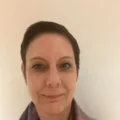
Liana Meffert is a medical student.
She shares her story and discusses her KevinMD article, “It goes without saying: a residency interview.”
Did you enjoy today’s episode?
Rate and review the show so more audiences can find The Podcast by KevinMD.
Subscribe on your favorite podcast app to get notified when a new episode comes out.
Reflect and earn 1.0 AMA PRA Category 1 CME for this episode.
Also available in Category 1 CME bundles.
Powered by CMEfy – a seamless way for busy clinician learners to discover Internet Point-of-Care Learning opportunities that reward AMA PRA Category 1 Credit(s)™. Learn more at about.cmefy.com/cme-info
Do you know someone who might enjoy this episode? Share this episode with anyone who wants to hear health care stories filled with information, insight, and inspiration.

Hosted by Kevin Pho, MD, The Podcast by KevinMD shares the stories of the many who intersect with our health care system but are rarely heard from.


Transcript
Kevin Pho: Hi, and welcome to the show, where we share the stories of the many who intersect with our health care system but are rarely heard from. My name is Kevin Pho, founder and editor of KevinMD. Rate and review the show at KevinMD.com/rate. Subscribe at KevinMD.com/follow. Today on the show, we have Liana Meffert. She is a medical student, and she wrote the KevinMD article “It goes without saying: a residency interview.” Liana, welcome to the show.
Liana Meffert: Hey, thanks so much for having me.
Kevin Pho: So we’ll get into your article in a little bit, but first off, can you share your story and journey to where you are today?
Liana Meffert: Yeah, it was kind of a circuitous route. I started out as a psychology major, going to school in California. I ended up transferring to Emory University in Atlanta, Georgia, and ended up graduating with a BA and a BS. I did some creative writing there, mostly poetry, and I’ve kind of kept it up since. I’m at medical school in Iowa City at the University of Iowa, and I’m graduating this year. So in just a couple of weeks here, I will be off to D.C., starting emergency medicine residency at Georgetown.
Real physician voices, twice a week
Free, and one click to unsubscribe.
Kevin Pho: Wonderful. Congratulations on your match.
Liana Meffert: Well, thank you.
Kevin Pho: So tell me how writing has influenced you as a medical student.
Liana Meffert: It’s an interesting question, because I’ve just been writing the whole time, so there’s no control for that. But I think it’s made me a more sane medical student. It’s dual purpose, in that I create stuff and I get to share it with everyone, but it’s also totally a coping skill and mechanism for me. It’s a way for me to process things that are happening.
My favorite part about writing is just the process of figuring out what I’m writing about and what I want to share as I’m writing it. Sometimes a year will go by between an event and when it kind of circles back to me, and I’ll be like, “Oh, this is what I wanted to talk about this whole time.” So it’s a very, what’s the word? It’s just a very gratifying process.
Kevin Pho: So you mentioned that writing was a coping mechanism for you, and I’ve talked to a lot of medical students on the show, and medical school, as we both know, is a very, very difficult and trying process. Can you recall an event, an example, or a story of how you used writing as a coping mechanism for some of the obstacles and difficulties that you faced?
Liana Meffert: Yeah, I mean, I think this piece in and of itself is a good example of that. Residency interviews are really important. How else would you know where you wanted to go? But at the same time, I think it can be a really trying experience, especially right now. It feels very depersonalized, because we’re not even seeing people in person, and you get asked the same questions over and over again. Sometimes it’s the same question multiple times within the same interview, or between interviewers, but for the same school.
So I found myself thinking about what are the things that I really want to say. Not that anything I said was not genuine, but it was filtered. There’s a certain way that you’re expected to present yourself, which is kind of at the intersection between personal and professional. And I started coming up with these alternative answers. It was a way for me to vent, in a way that felt really meaningful to me, to be able to just get out into the world these other ways of communicating, in the ways that I was thinking.
Kevin Pho: Yes, and you talk about that in your KevinMD article, “It goes without saying: a residency interview.” So give us an example of a common question that you were asked, and how you had to give a more or less filtered response, and how you kind of had to hide what you really wanted to say.
Liana Meffert: Most people will ask you, “So, tell me about yourself.” That’s kind of the first question, and it’s such a broad question, you know? At the same time, they’ll ask you these questions, and sometimes it’ll be like you have two minutes left in the interview, and you’re like, “How do I summarize myself in two minutes? What parts do I choose to emphasize? What parts do I choose to not emphasize?” For me, I talked a lot about writing, because it was really important to me and it felt like a really genuine presentation of myself, but at the same time, I was leaving out other stuff that was equally important in different ways.
So the second part of that question, then, really depended on the day. Sometimes what I wanted to say is, “Hey, I’m out of cereal this morning.” I didn’t really think that. Just something like, “This is what’s happening to me right now.” But instead, usually it’s where I went to school, an important patient experience that I had, and where I grew up, and sometimes that just doesn’t really feel like the most relevant part of who I am today, in a way.
Kevin Pho: So tell me about that interview process. I know during the pandemic it really threw everything for a loop. Were a lot of your interviews virtual?
Liana Meffert: We were 100 percent. They were all virtual.
Kevin Pho: So what did you learn by going through that virtual interview experience?
Liana Meffert: I learned that I saved a lot of money. Besides that, in some ways it was refreshing, because, as with so many parts of the pandemic, as you’ve seen play out, people are just trying to find their way in these sort of foreign territories. In some ways, it was a little bit more personalized, because people were interviewing from their homes, and their dogs were climbing on their laps, and you could hear their kids in the background. I did appreciate that element of it.
It definitely just felt like we were all in the same boat, in a way. The schools had been doing it; this was their second year doing it, and obviously it was our first time. For a lot of people, it was their first time doing it. But everyone was still really just trying to figure it out, and there was definitely a sense of just kind of winging it. So that was another interesting component of the virtual interviews that I hadn’t anticipated.
Kevin Pho: Now, as a medical student, you’ve been through so many in-person interviews. I’ve talked to other medical students, and sometimes they do different things virtually versus in person. So when you were interviewing for residency virtually, was there anything different that you did versus an in-person interview?
Liana Meffert: I mean, the last time I interviewed was four years ago, for medical school, so I’m sure I’m a different interviewee than I was four years ago. It is strange to be able to see yourself while you’re interviewing, right? So I’m sure that plays into it in ways that I can’t really predict. I think that I put a lot more emphasis on my facial expressions and smiling. Your body language is only really conveyed from here up, so you have to do a lot more work with your face, trying to connect with a person just through your own facial expressions.
Kevin Pho: So you matched into emergency medicine, correct?
Liana Meffert: Yeah.
Kevin Pho: Yeah, so tell me about what you’re looking forward to, and what were some of the reasons why you decided to match into emergency medicine?
Liana Meffert: I’m looking forward to having a lot of responsibility, actually. It’s equally terrifying and exciting, but I’ve been a student for my whole life, and this is the first step, and you’re at this transition where you’re still a student, but you’re also sort of a professional. So I’m looking forward to taking on that next step of responsibility and really seeing how I rise to the occasion of it.
In terms of why the specialty, there are a number of reasons. I think as a medical student, you rotate through different specialties, and you just get a sense for what fits and what doesn’t and where you feel happiest. For me, I really like the fast pace of emergency medicine. I really like that, for better or worse, there’s not really continuity of care. You’re on, or you’re off. As someone who’s looking to continue writing and really make that part of my career, I wanted to have a clear delineation between my physician professional life and my writing life. So it fit well for me.
Something I noticed more, actually, as I committed to the specialty, was that there are a lot of really incredible emergency medicine writers, because there are some incredible stories. Frank Huyler is one who comes to mind right now. I read all his stuff; I reread all his stuff recently, and it makes me feel like there’s a lot of potential here for really finding a common ground between the writing and the experience. I think it’s also probably a really nice, like we said before, coping mechanism. This is a specialty that has a lot of PTSD and a lot of burnout, and I’m very cognizant of that. And I think if I didn’t have writing, I might not be going into the specialty.
Kevin Pho: We’re talking to Liana Meffert. She’s a medical student, and she wrote the KevinMD article “It goes without saying: a residency interview.” So now that you have matched, you’ve gone through the interview process. As you reflect on that, are there any pieces of advice that you could give to other medical students who will be going through the same process?
Liana Meffert: Oh, there are so many random pieces of advice I could give on this. I did couples matching, actually, with my partner, so that’s a whole other story. There are a whole lot of other variables to consider for couples matching. But I think some of the best pieces of advice I got came from talking to a lot of residents over the phone at programs I interviewed at. I always asked them, “What would you tell yourself when you were matching last year? What advice would you give yourself?” It’s so cliché, and they always say, “It’ll all work out,” but it really is. You have to really embrace the fact that you have, I mean, you have some control, but you don’t have a lot of control over the process.
Something my partner and I did that I really appreciated was that we set aside time during the day to discuss our ideas for where we wanted to go to residency, how we were going to negotiate that, and how we wanted to rank things. The rest of the time, we led a completely different life. We separated that, because you can really run yourself in circles during the months where you’re deciding how to rank schools. You really need to partition that a little bit so you don’t go crazy in the process, because it’s a long time to be figuring out what your life is going to look like for the next three years or four years, and then for the rest of your career. So think about it hard, and do your best when you are thinking about it, but also give yourself time off. You kind of need that time to do other things, too.
Kevin Pho: And my final question: What are some of your take-home messages that you want to leave with the KevinMD audience?
Liana Meffert: I think just keep creating. I think this piece really came together because I started challenging myself. I had this whole list of residency questions that I wanted to prep for, which turned out to be pretty spot-on with a lot of questions I actually got. But then, throughout the residency season, I also was looking at these questions, and I would challenge myself to write an answer that was something that I wanted to give that I hadn’t given. So I think, keep being creative, and also look for creativity and opportunities in places where you wouldn’t really expect it, because it’s really everywhere, even outside the hospital. So I think it’s a way to help yourself, to help with work-life balance.
Kevin Pho: Liana, thank you so much for sharing your story, time, and insight, and thanks again for being on the show.
Listen and followApple PodcastsSpotifyYouTubeMore apps · Browse all episodes