Listen and followApple PodcastsSpotifyYouTubeMore apps · Browse all episodes
“Sickle cell disease (SCD) affects about 100,000 Americans as an inherited genetic disorder with intermittent exacerbations requiring hospitalization. SCD is also a painful and complicated disease with no single physician specialist that can provide pain relief. While SCD pain is similar in severity to cancer pain, patients struggle to find adequate pain relief because they are often labeled as ‘doesn’t appear in pain’ as the imaging scans may not show actual pathology.
Some palliative colleagues draw the comparison that cancer is visible in scans and SCD is not, which gives mental ease to clinicians as cancer patients’ pain is easier to believe and treat appropriately. However, the source of SCD pain is typically micro-vascular because the disease generates pain due to occlusion in the micro-vascular. It can’t be “seen” on scans except when worse complications like acute chest syndrome or avascular necrosis of a bigger joint are present.”
Ramandeep Kaur is a palliative medicine physician.
She shares her story and discusses her KevinMD article, “Patients need palliative care to manage the pain of sickle cell disease.”
Did you enjoy today’s episode?
Rate and review the show so more audiences can find The Podcast by KevinMD.
Subscribe on your favorite podcast app to get notified when a new episode comes out.
Reflect and earn 1.0 AMA PRA Category 1 CME for this episode.
Also available in Category 1 CME bundles.
Powered by CMEfy – a seamless way for busy clinician learners to discover Internet Point-of-Care Learning opportunities that reward AMA PRA Category 1 Credit(s)™. Learn more at about.cmefy.com/cme-info
Do you know someone who might enjoy this episode? Share this episode with anyone who wants to hear health care stories filled with information, insight, and inspiration.

Hosted by Kevin Pho, MD, The Podcast by KevinMD shares the stories of the many who intersect with our health care system but are rarely heard from.


Transcript
Kevin Pho: Hi, welcome to the show, where we share the stories of the many who intersect with our health care system but are rarely heard from. My name is Kevin Pho, founder and editor of KevinMD. Rate and review at KevinMD.com/rate. Subscribe at KevinMD.com/follow. Today on the show, we have Ramandeep Kaur. She is a palliative care physician, and she wrote the KevinMD article “Patients need palliative care to manage the pain of sickle cell disease.” Ramandeep, welcome to the show.
Ramandeep Kaur: Thank you, Kevin. It’s really nice to be on your show.
Kevin Pho: So we’ll get into your article in a little bit, but first off, can you share your story and journey to where you are today?
Ramandeep Kaur: My name is Ramandeep Kaur. I’m a family medicine-trained physician with a fellowship in hospice and palliative medicine. Before that, I graduated from Government Medical College in India, and I started taking care of sickle cell patients in 2013 with my first job at Rush University Medical Center. As a requirement for PCA and higher doses of pain medications, the patients typically need either pain anesthesia or palliative medicine to manage their pain. That’s how I got involved in the treatment of sickle cell disease patients.
Real physician voices, twice a week
Free, and one click to unsubscribe.
Kevin Pho: All right. So just walk me through a typical day of what you do in palliative care, and we’ll talk about your work with sickle cell disease patients a little bit later on. But tell me about some of the common cases that you see in a typical day.
Ramandeep Kaur: Yes. So as palliative physicians, we see patients having cancer anywhere along the trajectory, even from just the beginning of the diagnosis, and a few of my patients haven’t even seen oncologists first because they had such severe pain, for example, sarcoma patients. Following their trajectory, either they recover from cancer or, unfortunately, they don’t recover from cancer. We continue to see them over the course of years as they are receiving their treatments, like chemotherapy.
Part of my practice is also hospice care, and that’s with one of the private organizations here, where I help manage their inpatient hospice unit. The third part of my practice is the cancer clinic and the primary palliative care clinic. In the cancer clinic, we typically manage cancer patients. For primary palliative care, we do manage patients who don’t have cancer but have diseases like sickle cell disease, extensive wound care, various other diseases that are life-limiting, but they need pain management. So we opened that primary palliative care clinic almost three to four years ago, and we started seeing patients under all the diagnoses that are life-limiting, not just cancer.
Kevin Pho: All right, and we’re going to talk about one of those diagnoses that aren’t cancer-related in your KevinMD article, “Patients need palliative care to manage the pain of sickle cell disease.” Now, before I ask you to summarize the article, for those who aren’t familiar with sickle cell disease, can you just give a brief introduction as to what that is?
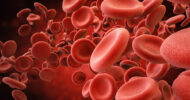
Ramandeep Kaur: Yes, and thank you for that, because yesterday I was giving another talk where I realized that half of the audience were not even physicians or from a medical background. So sickle cell disease is inherited. It’s a genetic disorder in which there is one abnormal gene. Because of that abnormal gene, the hemoglobin turns into a sickle shape, and because of that abnormal shape, it clogs the arteries, resulting in these occlusive crises. Patients can have these crises anywhere from every month to a few times a year, in which they will need hospitalization with IV pain medications, IV hydration, and all other treatments to overcome these crises.
It’s very individual. You cannot predict when a crisis is going to come or how many times it will come. There is no generalizability, like this many crises per year. Opioids have been the lifesaver medications. Patients with sickle cell disease will start receiving these medications as young as six months of age. Because of the presence of this disease itself, the patients typically have a much shorter prognosis compared to the general population. The average prognosis is about 38 years here for adult males with this disease and 42 years for adult females. That’s how I will summarize how we generally look at sickle cell disease.
Kevin Pho: And let me just jump in and ask you. If a patient comes to the emergency department with a vaso-occlusive crisis because of sickle cell disease, how do they present, and what are they feeling?
Ramandeep Kaur: That’s a very good question, actually. Sickle Cell Anemia News has an article that describes the patients’ own feelings in their own words. Some patients will describe that it feels like having sharp glass flowing through their body. It feels like multiple fractures throughout the body and, at the same time, having migraines. The females who have given birth to children reported that this pain is at least 10 times worse than that pain, and this pain continues until the painkillers kick in. Again, I have used the patients’ exact words rather than my own, as it’s hard to describe someone else’s pain.
Kevin Pho: All right. Now, with that background, let’s talk about your KevinMD article, and it’s titled “Patients need palliative care to manage the pain of sickle cell disease.” Now, for those of you who get a chance to read your article, can you just walk my audience through it and share the story of why you decided to write it?
Ramandeep Kaur: Yes. Sickle cell disease is typically called an orphan disease, and there are multiple reasons. One reason that I will describe, and why I even thought about this article, is because there’s no one physician who’s taking the ownership of providing comprehensive pain management. Hematologists and other physicians that primarily take care of sickle cell disease have not received extensive training in pain management, versus a palliative physician, who receives extensive training in how to manage pain medications but has never been taught sickle cell disease. Sickle cell disease is not in the palliative fellowship curriculum, at least not till today.
I realized there was a significant bias when it comes to treating the pain of a sickle cell disease patient, and it’s not just the physical pain; there is a good component of non-physical pain. The trigger point was when I heard a sickle cell disease patient being compared to a back pain patient. There is no comparison, no comparison at all, between a back pain patient, a simple, pure back pain, and a sickle cell disease patient. That triggered me to write something down, so I can advocate more for the patients, that this disease is not something that could be compared to a very benign disease.
And opioid medications are something that, as you know, has been involved in an epidemic, and it continues despite the fact that we have been prescribing less and less. It has been prescribed 38 percent less since 2016. Opioid-related deaths still have jumped. So we need to think about what we are doing here, and actually, we are providing more harm to this population by not giving them proper access to the treatments that treat their pain. That triggered me to write this article.
A few physicians from a palliative medicine background have their practice very restricted to just taking care of cancer, and we have heard this: “Palliative takes care of only cancer patients.” So it’s only one diagnosis that we are very fixated on. In no way, shape, or form are sickle cell disease and cancer comparable. Sickle cell disease patients live with a worse quality of life over a long period of time, eventually dying from it. This disease needs palliative as much as any cancer patient.
Kevin Pho: So let’s say you were consulted on a sickle cell case in a hospital. Tell me what you would do differently.
Ramandeep Kaur: I have started applying the concept of total pain in sickle cell patients. Our anesthesia colleagues do a fantastic job in managing medications. At the same time, a palliative provider can come in and assess the total pain. You will be surprised how our young 19-year-old sickle cell patient last week could not tell me the difference between pain generated from her emotional crisis versus the actual sickle cell pain. We cannot treat the non-physical pain with the same high doses of opioids, because we actually could be doing more harm than good.
Our anesthesia colleagues can treat the pain with the same PCA and the same high doses of medicine, but this population needs a much more comprehensive approach, not just in the hospital but also for continuity of care and building rapport with this population in the clinic setting as well. We can start something in the hospital, but it won’t materialize; it won’t make a change in their quality of life unless that’s carried through as an outpatient as well.
Kevin Pho: Do you see sickle cell patients who were initially hospitalized, and then do you care for them in the outpatient setting as well after they’re discharged?
Ramandeep Kaur: Yes, and that’s the initiative that we started last year, the Rush Sickle Cell Palliative Clinic. Due to the staff shortage, it has been once or twice a month. Yes, I ask the patients that I see in-house to follow up in clinic as well, because that’s how we can maintain the continuity of all the medications and all the non-pharmacological methods that we have initiated in the hospital, to be carried into the clinic setting. There are patients who may be out of network, and we have received a lot of help from case management on how to make sure that we can continue follow-up in our institution.
Kevin Pho: Now, of course, I know Rush has that connection between palliative care and sickle cell disease, but what about the rest of the country? In general, what kind of training do palliative care physicians have when it comes to sickle cell disease?
Ramandeep Kaur: In general, we do not receive any training in sickle cell disease. In my fellowship, which I completed at Henry Ford in Detroit, there was not a single sickle cell patient that I saw. It was something that I got started with in my job, and I grew out of that comfort zone. I wanted to learn more and how to expand myself. But there is no curriculum, as I mentioned earlier, in the palliative care fellowships. I really wish we can go there eventually.
There have been some smaller hospital systems, like in the suburbs of Chicago, where palliative physicians have approached us: “Hey, I am being asked to see sickle cell patients. Can you help guide me through how I should see them?” There have been at least three palliative care physicians that approached us, and we have helped them with various modules and advised them on what to look for and how to start treating these patients. But in general, I have not observed palliative taking on this responsibility, and I really wish we can go there.
Kevin Pho: So at Rush, are you routinely consulted when someone is admitted for sickle cell crisis?
Ramandeep Kaur: Yes, our team is the primary consulting team for sickle cell disease, and not pain anesthesia. Our team sees at least five to seven patients on a daily basis with sickle cell crisis. We have a hematologist and good collaboration with them. We do manage patients in-house, and then the majority of them follow with us in clinic.
Kevin Pho: We’re talking to Ramandeep Kaur. She is a palliative care physician. She wrote the KevinMD article “Patients need palliative care to manage the pain of sickle cell disease.” Ramandeep, in a primary care setting, for someone who doesn’t have access to, say, palliative care that’s familiar with sickle cell disease, do you have any tips that you give to some of the primary care clinicians who may be listening to this podcast?
Ramandeep Kaur: Yes. My biggest advice will be that we need to keep ourselves open to learning more, for example, learning how buprenorphine could be really helpful in this patient subset, and it is something, as a newer medication, that could be tried. And second, how we could explore the concept of total pain in sickle cell disease. Patients do not suffer just from physical pain. There is a lot of non-physical pain, psychological pain, existential distress, and social pain associated with this disease, because it comes with the patient being in the hospital at least once or twice a year. There is no normal life for them. Some of them do not have social support, so expanding our view on how we are treating these patients is really important. The total pain concept has been applied in cancer. I think it’s high time that we should apply it to cancer disease as well.
Kevin Pho: And when you talk about these non-physical sources of pain, give us some concrete examples of what you could do to help with that aspect.
Ramandeep Kaur: I will take the example of the patient that I saw last week. She was 19 years old, and her crisis was triggered by emotional distress over an issue with a friend. I asked her what triggered the crisis, and that’s what she mentioned. Her lab work did not show any hemolysis. Typically, the pain of sickle cell is not diagnosed with any lab factor. It’s the patient’s word and the family’s word that, yes, someone is in pain.
At the same time, I was able to ask her various motivational questions: What triggered it? What happened? How did you end up in the hospital? How are you feeling different right now? At that point, she was able to diagnose, and she already had a history of depression, that there was a component of anxiety that actually triggers her pain, and she was treating her anxiety with IV opioids. That was something that the patient was never told how to distinguish before, and IV opioids are the only medications that were available to them.
Not that we should not treat these patients with actual hemolytic crises. At the same time, we need to use our motivational questioning: What other things are they feeling at the time of having a crisis? How is their mood? How was it different a week before the crisis? How are they feeling today, three days after admission, four days after admission? That will help you draw the answers about what else is going on in this patient’s life.
Kevin Pho: And my final question: What are some of your take-home messages that you want to leave with the KevinMD audience?
Ramandeep Kaur: Sickle cell disease has been called an orphan disease, and it will be called an orphan disease, I believe, for a longer time from now onwards. This is the time that, as palliative providers, we should use our comprehensive approach for this patient population, for their overall pain management, as we provide for the cancer population. We have the skills, we have the ability, we have the empathy that this patient population needs. That will be my final advice to these listeners.
Kevin Pho: Thank you, Ramandeep. Thank you so much for sharing your time and insight, and thanks again for being on the show.
Ramandeep Kaur: Thank you, Kevin.
Listen and followApple PodcastsSpotifyYouTubeMore apps · Browse all episodes