Susannah Fox

How Twitter is a library and field work combined

by | in Social media | one comment

Recently, I dashed off this tweet:

PhD student just asked me which journals I read to stay up to date on health + tech. My answer: Twitter.
It was classic RT bait and indeed it was echoed dozens of times by fellow Twitter geeks — more than any other tweet I’ve written.  But I would like to qualify it with a fuller explanation.  I don’t just read Twitter and ignore journals.  ...

Using social networks to help patients quit smoking

by | in Social media | 2 comments

David C. Kibbe and Joseph C. Kvedar’s article, "Building a Research Agenda for Participatory Medicine" highlighted two of their "ready-to-go" research questions:

  • What is the role of coaching in sparking and supporting increased participation over time?
  • What can we learn from research on how social norms shape behavior—with the idea of developing hypotheses on whether social networks could serve as a coaching tool?
Recently, the Legacy Foundation’s Schroeder Institute focused ...

Love is the secret ingredient to health

by | in Patient | 5 comments

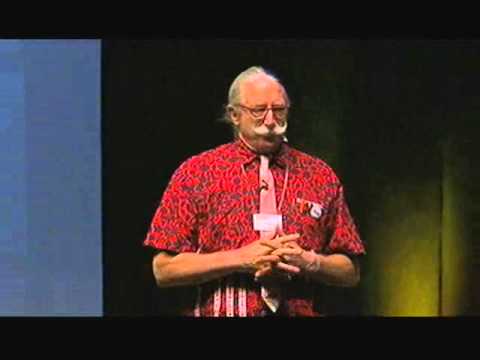
Last year's Mayo Transform 2010 symposium was a two-day excursion into the world of science, data, design, and the secret ingredient to health: love.Patch Adams, MD, kicked things off in grand style. If you’ve never seen him speak, treat yourself to a hit of his energy:In 1971, he and his compatriots opened a 24×7 hospital in a six-bedroom house to address every ...

The internet and online health information trends

by | in Patient | 7 comments

Ten years ago, I wrote the Pew Internet Project’s first report on the impact of the internet on health care, calling it “The Online Health Care Revolution.”Back then, the idea that people were searching online for health information was revolutionary. All of a sudden, regular people had access to medical information that had always been locked up and out of reach.Ten years later, I am ready to declare ...

Using the internet for health information is not the exception

by | in Patient | 10 comments

New concepts need gimmicks. Proven concepts do not.The phenomenon of using the internet to gather and share health information is now mainstream. It’s time to change how we talk about it, revising and maybe even retiring certain terms.Some history to build our case:In 1998, only about one-third of American adults had access to the internet. Harris Interactive published pioneering research about how internet users gather health information online, ...

Chronic disease and using social media for health

by | in Social media | 3 comments

Speaking to the senior staff of the National Library of Medicine recently was like going before the best kind of murder board.Picture it: 30 of the nation’s smartest health information mavens around a polished conference room table, asking me sharp questions, suggesting new lines of inquiry, and offering their own insights. In other words, heaven.Our jumping-off point was the Pew Internet Project’s latest research on internet penetration, mobile use, and ...

Will patients embrace Health 2.0?

by | in Tech | 14 comments

Someone going by the name "Darthmed" recently posted a comment that stopped me in my tracks:

… The remaining 95% of “patients” out there are not motivated to become informed, or invest the time/energy/money in using any of these tools. These are the folks that know that fast food isn’t healthy, but are just too tired to choose differently. Some (emphasis on some) will do a standard Google search when they ...

Drug chains and the advice of online patient communities

by | in Social media | one comment

In May, I spoke at the Chronic Care and Prevention Congress about my most recent report, “Chronic Disease and the Internet.”I talked about the social life of health information and the internet’s power to connect people with information and with each other.  Living with chronic disease is associated with being offline – no surprise. What’s amazing and new is our finding that if someone can get access to the ...