The following op-ed was published on February 25th, 2009 in The New York Times’ Room for Debate blog.
With the number of the uninsured having risen to 48 million Americans, clearly the need for reform is dire. But President Obama made no mention of who exactly will take care of these patients, even if they get insurance under a successful health reform initiative.
As a primary care physician in southern New Hampshire, I’ve been able to observe a universal coverage experiment, similar to what Congress is likely to consider, taking place in the neighboring Massachusetts.
Since that state’s universal coverage law took effect in 2006, its health care system has been inundated with almost half a million new patients. The demand for medical services has rapidly outpaced the supply of care physicians able to provide care.
Real physician voices, twice a week
Free, and one click to unsubscribe.
In its most recent annual survey, the Massachusetts Medical Society found that the average wait time for a new patient to see a primary care doctor averaged 50 days. When you consider that this is a state with the highest density of physicians per capita nationally, it is frightening to think what the wait times would be in other parts of the country should universal coverage be enacted on a federal level.
When patients wait that long to see a physician, they inevitably find their way into the emergency department for care that ordinarily can be handled in an office setting. Doing so increases the cost of managing a routine issue up to ten-fold, and indeed, soaring utilization of emergency care has been an unanticipated consequence since reform was passed. In fact, patients who have obtained state-subsidized insurance visit the emergency department at a rate 14 percent higher than the average Massachusetts resident — evidence that lack of access to doctors is a big problem for newly insured patients.
The lesson here is that universal coverage must go hand in hand with the training of more primary care providers — not only doctors, but also nurse practitioners and physician assistants who can provide excellent primary care. According to the Association of American Medical Colleges, there will be a shortage of 46,000 generalist physicians by 2025, a deficit that not only will balloon under any universal care measure, but cannot be made up as both doctors and mid-level providers gravitate toward more lucrative specialty practices.
So, while any attempt at covering the millions of Americans without health insurance is a laudable goal, doing so without addressing a health care system ill-equipped to deal with millions more patients has the potential to make an already grim situation worse.
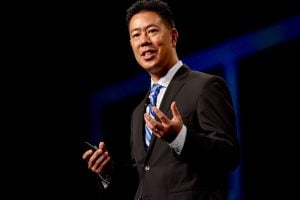
Kevin Pho, MD, is a practicing, board-certified internal medicine physician and the founder and editor of KevinMD, which he built from scratch in 2004 to give clinicians and patients a place to be heard. Over two decades, it has become one of the most recognizable physician-led publications in health care, drawing more than 7 million annual page views and over 500,000 followers across social media. He still sees patients in primary care in Nashua, New Hampshire, the practice he says keeps the platform honest.
He is the host of The Podcast by KevinMD, a daily, 15-minute show that has surpassed 2,000 episodes and 2.6 million IAB-certified downloads, featuring physicians, patients, caregivers, founders, and health care leaders in conversation about what they actually see and do. He is also a national media commentator and the coauthor of Establishing, Managing, and Protecting Your Online Reputation: A Social Media Guide for Physicians and Medical Practices.
An acclaimed keynote speaker, Kevin speaks nationwide to clinicians and non-clinicians on health care, digital media, physician leadership, and burnout. His signature keynote, “Connect and be heard: Make a difference in health care with social media,” traces his social media journey since 2004 and inspires audiences to strengthen the doctor-patient relationship, make their voices heard in health reform, and turn the tide against clinician burnout. He is the founder of Physician Speaking by KevinMD, a physician-run speakers bureau, and is available for speaking opportunities.
Kevin earned his medical degree from Boston University School of Medicine and completed his internal medicine residency at Boston University Medical Center. The New York Times called KevinMD “a highly-coveted publishing place for doctors and patients,” and Forbes called it a “must-read health blog.” He is an inductee of the Healthcare Internet Hall of Fame, a recipient of the American Medical Writers Association McGovern Award, and a New Hampshire Magazine Top Doctor.